



8 min read
A Day in the Life of a Director of Maintenance
A Director of Maintenance (DOM) walks into the office knowing that, on paper, everything might look fine. Aircraft are scheduled. Crews are assigned. Trips are lined up days or weeks in advance. But paper has a way of lying. What really matters is what happened overnight, what’s trending quietly in the logbooks, and what hasn’t quite revealed itself yet.
This role lives in the space between certainty and consequence. Some aircraft fly nearly every day. Others sit for weeks, then suddenly get tasked for a high-profile trip with no margin for error. The fleet is mixed. Utilization is uneven. Expectations are high and rarely flexible.
Every decision carries weight. Assign the wrong aircraft, and a routine trip becomes an aircraft-on-the-ground (AOG) with an owner watching the clock. Miss a repeat defect buried under inconsistent logbook language, and a manageable issue turns into a reactive scramble. Spend too much, and leadership asks questions. Spend too little and the risk shows up somewhere inconvenient and expensive.
What keeps DOMs up at night isn’t compliance checklists or inspection calendars. It’s an unknown pattern. The defect showed up twice, but didn’t look the same either time. The vendor repair that closed the logbook entry without actually fixing the problem. The spreadsheet that says everything’s under control until suddenly it isn’t.
This is a job defined by judgment calls made with imperfect information. And it’s why the first moments of the day matter more than most people realize.
7:30 a.m. | Morning Fleet Readiness Check
By 7:30 a.m., the DOM is already deep into the day’s first critical decision window. Overnight squawk logs are open. Logbook entries from late arrivals and early departures are rolling in. Aircraft status reports sit side by side with today’s flight schedule, highlighting which tails are expected to fly hard and which ones absolutely cannot hiccup.
This is the moment where small issues either get caught early or quietly slip through.
A few discrepancies stand out. One aircraft reports an oil leak. Another notes external engine seepage. A third mentions fluid on the cowling during post-flight. None of them scream emergency on their own. But taken together, they raise a familiar question: is this a coincidence, or the start of something bigger?
This is where manual reliability tracking starts to crack.
Logbook entries aren't standardized. One technician writes what they see. Another writes what they think it means. Abbreviations vary. Typos creep in. ATA codes don’t always line up cleanly. The DOM is forced to rely on institutional memory and a spreadsheet built years ago to make sense of it all.
Searching for related issues can take 20 minutes per tail. By the time the morning standup arrives, 30 to 45 minutes may already be gone just trying to answer a basic question: Is this recurring?
Worse, by the time a pattern becomes obvious, it’s often already happened three or four times. Sometimes it only becomes clear after an aircraft has gone AOG. At that point, the spreadsheet isn’t helping. It’s just documenting hindsight.
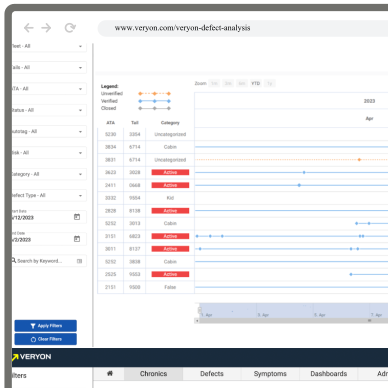
Veryon Defect Analysis removes the guesswork from this moment entirely.
AI-powered NLP automatically clusters related defects, recognizing that oil leak, external seepage, and fluid on cowling describe the same underlying issue, regardless of wording, abbreviations, or narrative style. The system flags the pattern on the second occurrence, not the fourth.
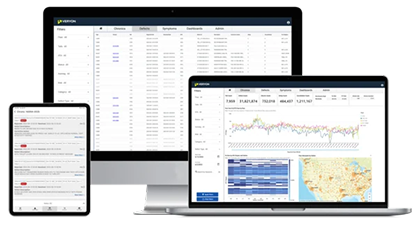
A real-time dashboard surfaces active chronic issues across the fleet, color-coded by severity. Red issues represent immediate dispatch risk. Orange issues require monitoring. Green issues are resolved and staying resolved.
Fleet-to-tail drill-down makes it possible to move from a high-level view to a specific aircraft’s defect history in seconds. With mobile access, this review often happens before the DOM even reaches the office.
Operators using Veryon Defect Analysis report a 25 to 40% reduction in time spent on manual defect tracking and a 33% reduction in chronic defects, simply because issues are identified earlier.
The morning standup stops being about deciphering data and starts being about action.
11 a.m. | Pre-Trip Planning & Scheduling
Late morning brings a meeting with operations. The weekly flight schedule is up on the screen. A high-profile owner trip is scheduled in three days. Tight timeline. High expectations. No backup plan that won’t be expensive or embarrassing.
The question everyone is waiting for is simple but loaded: Which aircraft can be confidently assigned to this mission?
On paper, several tails look acceptable. Inspections are current. No open MELs. But paper doesn’t show how aircraft actually live.
One jet may have flown 100 hours this month. Another may have flown 10. Traditional rules like “three squawks in 30 days” treat them the same, even though their wear profiles are completely different.
Low-utilization aircraft can hide problems for months. High-utilization aircraft generate noise that looks alarming without context. To compensate, Directors of Maintenance manually cross-check flight hours, cycles, and recent squawk history under time pressure.
These are multi-thousand-dollar availability decisions being made without utilization-aware insight. The risk isn’t theoretical. It shows up on the ramp.
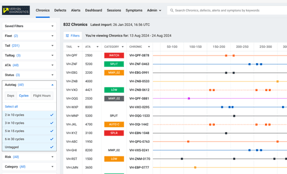 Veryon Defect Analysis normalizes defect trends by hours and cycles, not just calendar days. Patterns are evaluated based on how each aircraft actually flies.
Usage-aware thresholds allow operators to define what “recurring” really means for their operation. Two events in 15 hours may be significant for a high-use aircraft. Three events in 25 cycles may be more telling for another.
Tail-level baselines show what’s normal for each aircraft, making true outliers immediately visible. Predictive risk scoring highlights rising defect trends before they impact dispatch reliability.
The result is confidence rooted in reality, not optimism.
Operators using usage-based defect tracking see a 10 to 12% increase in aircraft availability, driven by smarter assignments and fewer unnecessary groundings.
2 p.m. | AOG Crisis Response
Mid-afternoon, the call comes in. An aircraft is AOG at an outstation. Hydraulic issue. Again.
The DOM is instantly in decision mode. Every hour grounded costs $1,000 to $2,000 or more in direct expenses. The reputational cost with the owner is harder to measure, but everyone feels it.
Wasn’t this system worked on two weeks ago? Was that fix supposed to hold?
Historically, this is where things slow down. Logbooks are searched. Technicians are called. Vendors are looped in. No one is quite sure whether this is the same issue or something new.
Without clear visibility into past corrective actions and outcomes, troubleshooting becomes trial and error. Parts get ordered “just in case.” Technicians guess at root cause because history is fragmented.
Instead of executing a known fix, the team is firefighting.
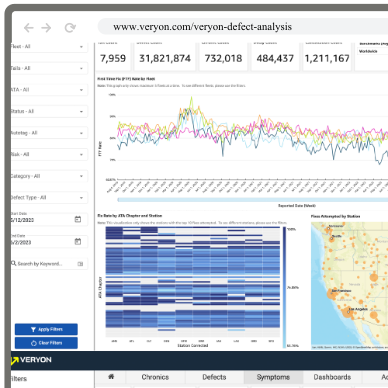 With Veryon Defect Analysis, the full defect history appears instantly. Every occurrence across the fleet and the specific tail is visible in one place.
Corrective actions are shown alongside time-to-recurrence data, making it clear which fixes actually worked and which ones failed quickly. Technicians can read original narratives from past events, not just summaries stripped of context.
Decisions shift from reactive to deliberate. The team executes the fix with the highest likelihood of holding.
Operators using Defect Analysis report 15 to 30% improvement in first-time fix rates and a 25 to 40% reduction in troubleshooting time, directly reducing AOG duration and cost.
4 p.m. | Maintenance Effectiveness Review
As the immediate crisis settles, attention turns inward. A recurring avionics issue has been “fixed” three times in six months. Twice by internal technicians. Once by an external vendor.
Invoices, work orders, and logbook entries are reviewed together.
Without clear data, it’s hard to know what’s really driving the repeats. Is this a training issue? A parts quality problem? A vendor that didn’t address the root cause?
Internal teams can’t be coached effectively. Vendors can’t be held accountable. Decisions about where work should live are based on instinct rather than evidence.
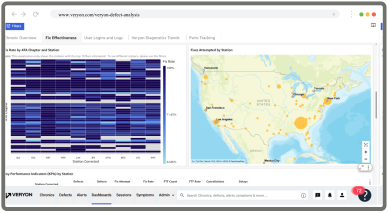 Fix effectiveness tracking shows which corrective actions stick and which don’t. Repeat event analysis flags how quickly defects return after any repair.
Performance comparisons reveal whether in-house teams or external vendors deliver lasting fixes. Work allocation insights help determine whether a repair should stay internal, move to a different MRO, or be escalated to the OEM.
Operators using Veryon Defect Analysis see a 20% reduction in unscheduled or unnecessary part removal or replacement, cutting cost and downtime driven by repeat failures.
6 p.m | Leadership & Owner Update
The day ends with reporting. A monthly update for leadership and owners is due.
Preventive maintenance is hard to explain when success looks like nothing is happening. Without benchmarking or cost-avoidance data, Directors of Maintenance rely on stories to justify proactive spend.
Leadership wants numbers. Maintenance often has anecdotes.
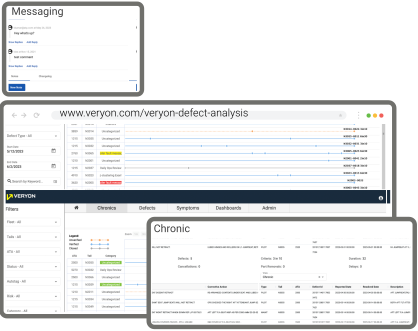 Veryon Defect Analysis provides a single source of truth. Anonymous benchmarking compares fleet reliability against similar operators. Cost-avoidance reporting quantifies AOGs prevented, parts waste avoided, and improved scheduling predictability.
Trend dashboards show before-and-after improvements in repeat defect rates, first-time-fix rates, and unscheduled removals. Executive-ready visuals turn maintenance performance into something leadership can understand and trust.
Operators typically see a 5 to 15:1 ROI within the first year, alongside measurable reductions in preventable AOG events, operational costs, and a 10 to 12% improvement in aircraft availability.
How Predicting the Fix Reduces AOG Risk
By the end of the day, the job itself hasn’t changed. The responsibility is still there, the expectations are still high, and the aircraft will continue to fly on uneven schedules that don’t politely align with maintenance calendars. What has changed is the amount of uncertainty behind each decision.
Rapid Defect Detection
The first shift shows up early, when repeat issues stop hiding in plain sight. Instead of scanning logbooks and hoping something looks familiar, patterns surface on their own, even when technicians describe the same problem in different ways. An oil leak, external seepage, or fluid on the cowling no longer feels like separate conversations. They resolve into one issue that deserves attention before it escalates.
Catching a defect on the second occurrence, rather than on the fourth, often makes the difference between scheduling a controlled fix and dealing with a very public AOG. In an environment where data volume is limited and teams are lean, rapid defect detection turns uncertainty into something manageable rather than something that waits to surprise everyone.
Proactive, Usage-Based Planning
That clarity carries into planning conversations as well. Pre-trip scheduling stops relying on what looks acceptable on a calendar and starts reflecting how each aircraft actually flies. High-utilization aircraft are evaluated in context rather than flagged prematurely, while low-use tails no longer quietly accumulate risk just because they haven’t flown much lately.
When maintenance planning is tied to hours and cycles instead of arbitrary time windows, decisions feel grounded rather than cautious. Aircraft assignments become easier to defend because they’re based on real usage patterns, not gut feel. Over time, this is what quietly improves availability without introducing unnecessary risk.
Fleet-To-Tail Visibility and Confidence
The biggest difference shows up when something goes wrong. An AOG no longer triggers a memory test or a scramble through old logbooks. The full history is already visible, from fleet-level trends down to tail-specific corrective actions, along with clear evidence of what worked and what didn’t.
That same visibility changes day-to-day conversations. Technicians know what fixed the issue last time. Vendor discussions are grounded in outcomes instead of opinions. Leadership updates rely on numbers rather than anecdotes. Confidence grows because decisions can be explained, defended, and repeated.
What Changes by the End of the Day
The workload doesn’t disappear, and the pressure never really lets up. But the decisions feel different. There is less guessing, fewer assumptions, and more confidence that problems are being addressed before they turn into emergencies.
Rapid defect detection, proactive usage-based planning, and fleet-to-tail visibility don’t eliminate risk. They make it visible, understandable, and controllable. And for a DOM, that shift is often the difference between constantly reacting and finally feeling in control.
Get started with Veryon Defect Analysis
 If this day feels familiar, it’s probably because it is.
Veryon Defect Analysis is built for DOMs who want fewer surprises, clearer decisions, and confidence that repeat issues won’t turn into AOGs. It uses AI to surface patterns early, connect fleet-level trends to tail-specific history, and help teams move from guessing to predicting the fix.
If you’re ready to see how it works in your operation, book a demo and take a closer look at how Veryon Defect Analysis turns logbook noise into actionable insight.

Want more resources?
Explore Veryon's full library of expert content and aviation insights — from maintenance tracking to diagnostics, predictive reliability, and beyond.



Stay connected
Join thousands of aviation professionals who turn to Veryon for insights on predictive maintenance, industry innovation, and emerging tech trends.
Follow Veryon on LinkedIn and be part of the conversation driving aviation's digital transformation.