


6 min read
A practical look at the real indicators that show your team can move from digital to intelligent.
Search engines aside, let's be real. Business aviation is stuck in a weird in-between stage right now. Everywhere you look, people are talking about predictive maintenance, yet most operators are still living somewhere between digital recordkeeping and true intelligence. And that gap is exactly where frustration lives.
You invest in better software, modernize workflows, and digitize paper logs. You try to stay ahead of what the industry keeps calling the "AI wave," but the leap from digital to predictive still feels just out of reach.
Here is what many operators overlook. AI readiness has very little to do with buying more technology. It's about building an environment where tech can actually help your team make better decisions. When the foundation is solid, platforms like Veryon, powered behind the scenes by Veryon AIRE, can take what you already have and surface insights that help with troubleshooting, trend-spotting, and staying ahead of recurring issues.
Across business aviation, operators that have crossed that threshold are already seeing meaningful results. They are reporting fewer avoidable disruptions, greater diagnostic accuracy, fewer repeat write-ups, and more dependable schedules.
So how do you know if your team is ready to reach the same point? These five signs make it easier to see.
1. Your system integrates instead of competing
This is the single clearest indicator of AI readiness. Meaningful intelligence only works when the operation behaves like one system, not five separate ones. But honestly, it's just as critical for the people turning wrenches every day.
If your tracking platform, technical publications, and defect reporting all live in separate digital islands, AI has no way to understand the full maintenance picture. But neither can technicians trying to keep aircraft moving. Without shared context, everyone spends more time hinting for information than acting on it. Building clean relationships between data points isn’t just future-proofing for AI. It’s how teams become more proactive, faster, and safer right now.
Operators who are truly AI-ready usually have:
- Tracking that shares data directly with publications
- Defect reporting that automatically pulls historical context
- Maintenance events that sync without duplicate entry
- Configuration data that travels cleanly with the aircraft
- Log entries that link back to manuals, compliance, and prior discrepancies
Picture this. An aircraft keeps throwing a recurring pressurization caution. In a disconnected environment, you would need to jump between systems, flip through old PDFs, call the last tech who touched the squawk, and manually stitch the situation together.
But in an integrated environment, products powered by Veryon AIRE's capabilities can instantly pull 10 years of discrepancy history, determine whether other aircraft have seen the same signature, compare environmental factors, and forecast the most likely root cause.
Integration is not a luxury. It is the foundation that turns scattered data into actual intelligence.
2. Your data is accessible, clean, and current
Most directors of maintenance (DOM) are sitting on mountains of data they can't actually use. And it is not because the data is missing. It is because it lives in outdated PDFs, mismatched formats, old email chains, or some mystery folder no one wants to admit they cannot find. Not to mention the physical logbooks and paper documentation still floating around the hangar.
AI readiness becomes clear when your data is:
- Current and synchronized
- Consistently formatted
- Easily searchable
- Instantly retrievable
- Structured instead of tribal
Imagine an aircraft with intermittent avionics glitches that only happen under certain temperature conditions. A human might never see the pattern. The notes may even look unrelated. But AI-powered maintenance software can pull from accessible and structured data, can compare thousands of entries across similar airframes, and surface a subtle trend you would not catch on your own.
Better data equals better predictions. And clean, accessible data is what separates reactive teams from predictive ones.
3. Automation is already removing repetitive work
AI performs best when the underlying processes are stable, standardized, and digitized. It simply doesn't excel in environments where technicians are still battling manual data entry, paper workflows, or disconnected document systems. It thrives when automation eliminates repetitive, low-value tasks that slow maintenance execution.
If your teams are still re-entering the same information across multiple systems, hunting through PDFs for the right procedure, or manually validating compliance, AI won't yet deliver meaningful impact. You have to establish clean, reliable workflow foundations first.
AI-ready operations typically have:
- Auto-populated discrepancy and logbook entries from fully digital maintenance tracking
- Task cards and job cards that update without manual duplication
- Publications, manuals, and service information are automatically cross-referenced and embedded directly into the workflow
- Digital signatures and electronic approvals that route correctly every time
- Scheduled maintenance tasks that trigger automated follow-up actions
Consider a maintenance team that once spent 10 minutes manually typing every discrepancy into the system. With intelligent automation in place, like the auto-population and structured workflows in Veryon Tracking, that drops to seconds. Once the noise is removed, the team finally has the capacity to leverage Veryon AIRE-powered capabilities.
Automation establishes the structure. AI amplifies it, providing the intelligence your operation needs to move faster, avoid repeat defects, and make better decisions.
4. Insights reach the right people at the right time
Most systems produce data. Very few produce insights that change real decisions. And if the insight arrives late or lands in the wrong place, predictive maintenance collapses back into theory.
You know your operation is AI-ready when insights are:
- Fast enough to change upcoming events
- Tied to the exact aircraft, situation, and environment
- Delivered inside the technician's workflow
- Actionable instead of passive
- Uncluttered by dashboards no one checks anymore
Imagine an aircraft showing early hints of a repeat bleed air issue. Instead of waiting until the next weekly reliability review, AI-driven reliability capabilities can flag the recurrence immediately, show how other aircraft responded, and alert the team before the aircraft is dispatched again.
Timing is everything when you're trying to be proactive rather than reactive.
5. Your team is already pushing for proactive maintenance
Even in a highly digital environment, predictive-style operations don't happen without a culture that wants them. This is where business aviation teams shine. They want cleaner data, fewer repeat write-ups, and better foresight. They already think in patterns.
You know your culture is ready when you regularly hear:
- Can we identify this trend earlier?
- Why is this still manual?
- What does the data say?
- How do we prevent this from coming back?
A DOM who checks discrepancies once a month is working reactively. A DOM who wants real-time alerts or trend curves is already thinking in an AI-friendly mindset, even if the operation isn't fully there yet.
Take the AI Readiness Self Assessment
This is where curiosity becomes clarity.
In about two minutes, you can score your operation across the five readiness categories. Your result will fall into one of three profiles:
- Just Getting Started: Digital systems, but disconnected
- Developing Intelligence: Some automation, limited visibility
- AI Ready: Connected data enabling faster, more confident decisions
Your score becomes a personalized roadmap for your proactive maintenance journey.
Where AI-Powered Intelligence Capabilities Fit In
By the time an operation reaches true AI readiness, the next question becomes very practical. What intelligence engine can actually work inside the systems you already use and understand the way business aviation maintenance really functions?
Because the last thing anyone needs is a generic chatbot that has no grasp of the complexity, regulations, and nuance your teams deal with every day. You need intelligence built for aviation, not something guessing its way through it.
That is exactly where Veryon AIRE fits in.
Veryon AIRE isn't a separate platform you have to learn or manage. It is built directly into the Veryon products your team already depends on, which means the intelligence shows up naturally within the workflow rather than living in a disconnected dashboard that no one checks. It works differently in every Veryon platform to meet the specific needs of your team:
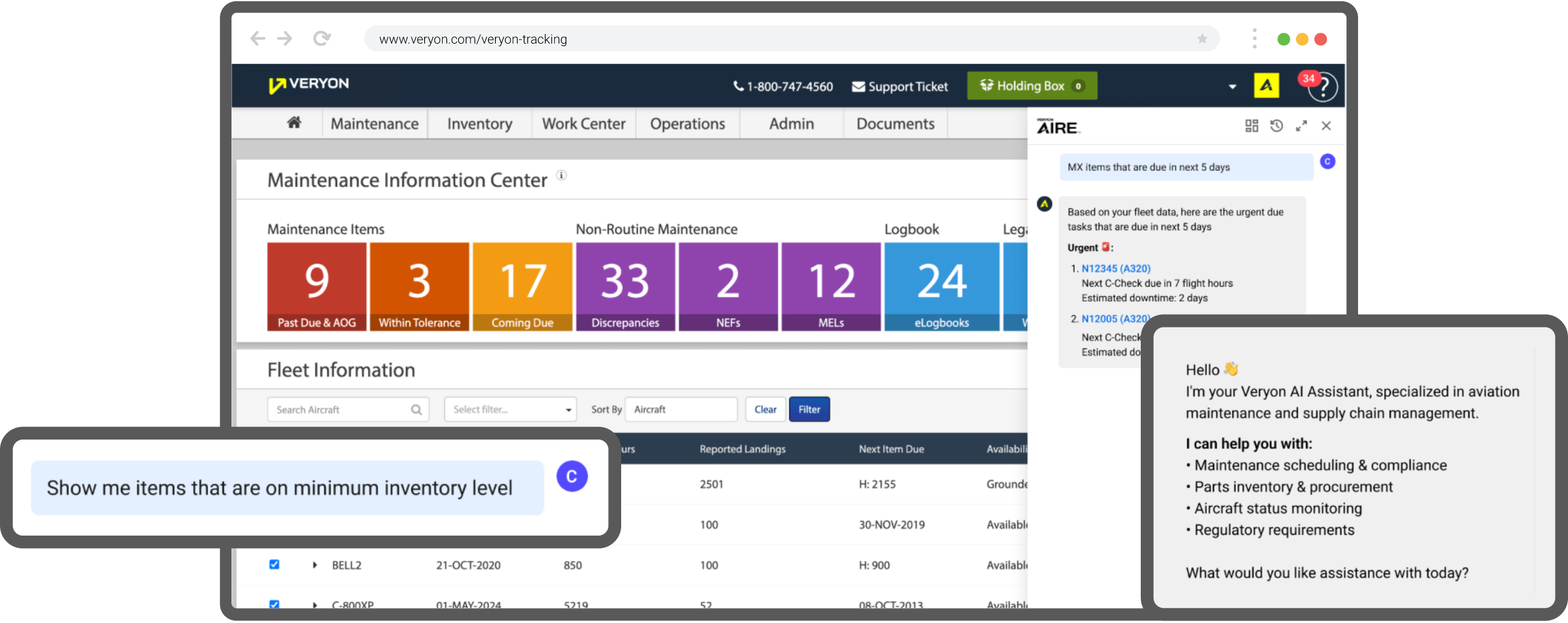
- In Veryon Tracking, Veryon AIRE acts as your always-on assistant. Ask it what's due next week, check inventory in seconds, or group maintenance tasks to minimize downtime. It connects the dots across systems so you can make faster decisions with full visibility.
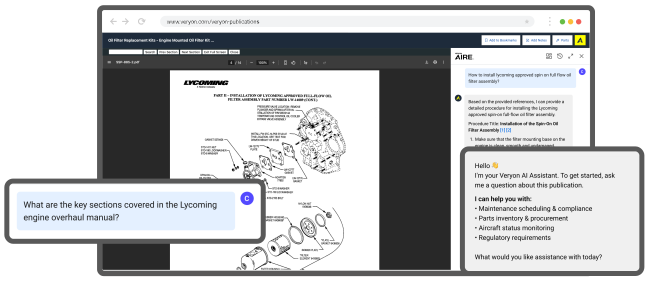
- In Veryon Publications, Veryon AIRE turns dense OEM manuals into smart, searchable knowledge. Ask for a procedure or torque spec, and it highlights the exact step in the approved manual — complete with links to related references. That means technicians spend less time scrolling and more time turning wrenches.
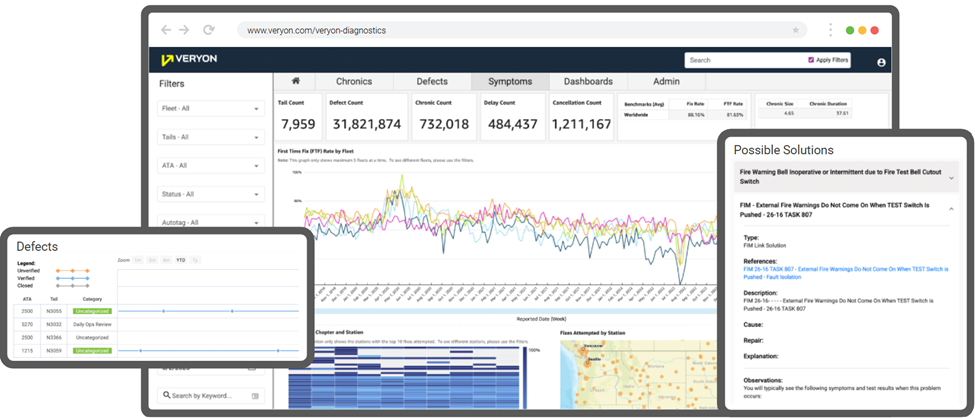
- In Veryon Defect Analysis, Veryon AIRE helps spot early recurrence patterns by comparing logbook and fleet activity. It helps teams act before minor issues turn into costly AOGs.
Turning Readiness into Real Results
AI is not some far-off idea in business aviation. The value shows up as soon as your systems, data, and processes are aligned enough for the technology actually to help you work smarter. The teams seeing real gains are not the ones buying the most tools. They are the ones connecting what they already have, cleaning up the noise, and giving their technicians the information they need, when they need it.
If the signals in this guide sound familiar, you are already closer to an intelligent, forward-leaning operation than it seems. The next step is simple. Take the assessment, see where your operation stands, and use that score to pinpoint the areas that will unlock the biggest improvements.
The operators who do this early end up with steadier schedules, fewer surprises, and a maintenance team that can stay ahead rather than react after the fact.
Get started with Veryon AIRE
See Veryon AIRE in action and explore how it can streamline your operation. Fill out the form, and we'll schedule a custom demo tailored to your workflow.
Want more resources?
Explore Veryon's full library of expert content and aviation insights — from maintenance tracking to diagnostics, predictive intelligence, and beyond.


Stay connected
Join thousands of aviation professionals who turn to Veryon for insights on proactive maintenance, industry innovation, and emerging tech trends.
Follow Veryon on LinkedIn and be part of the conversation driving aviation's digital transformation.