



 Vinay Kumar
Mechanics Don't Need Another Dashboard. They Need an Agent That Remembers.
Every airline maintenance operation runs on the same quiet assumption: that somewhere in the noise of logbook entries, fault codes, and work orders,...
Every airline maintenance operation runs on the same quiet assumption: that somewhere in the noise of logbook entries, fault codes, and work orders, a chronic defect is starting to form — and that someone will catch it before it becomes a delay, a cancellation, or an aircraft on the ground. For most of the industry, "catch it" still means a person reading, remembering, and connecting dots across thousands of free-text entries by hand. That's slow. It's also exactly where the cost hides.
We've spent nearly two decades building the alternative. What's changed recently isn't the mission — it's how fast the system learns.
Fifteen years ago, we built our defect-clustering system on traditional machine learning and natural language processing, and at the time, that was the correct call. The core problem was language. Technicians write messy, free-text defect descriptions, and someone had to teach a system that "spoiler," "splr," and "spoileron" are the same part.
It also did something we didn't fully appreciate until later. Every time an engineer reviewed a suggested chronic, approved it, split it, merged it, that decision got captured. Over time, that became something no OEM and no single operator has ever assembled - a dataset of real human maintenance judgment, at scale.
The tradeoff was real, too. Every time the model needed to adapt to a new fleet or pattern, a person had to manually rebuild the math underneath it. Slow. Heavy. Only ever as current as the last rebuild. That's the piece we've now changed.
Adaptive Clustering isn't a replacement for that machine learning foundation. It's a combination. Generative AI is genuinely better at language; parsing intent, understanding context, reading nuance the old NLP layer never could. But aviation is a regulated industry and you need outcomes that are consistent and repeatable, not a different answer every time you ask the same question. Traditional models are still better at holding that discipline.
So, the two run together, as an agent. Instead of a person manually rebuilding models to reflect new feedback, the agent ingests every human review, every approve, split, and merge, and adapts the clustering logic itself, by operator, by fleet type, or globally. The mechanic's job shifts from "redo the math" to "review and confirm." The agent drives, the traditional models hold the guardrails.
Adaptive Clustering isn't a smarter aviation dashboard. It's an agent that gets better every time a mechanic makes a decision — instead of a complicated process of incorporating field experience into traditional models.
Here's where it stops being an engineering story and starts being a financial one.
At one of the world's largest commercial carriers now running Adaptive Clustering across its aviation fleet, clustering accuracy improved by more than 200%. That's not a vanity metric. Even a one percent improvement in clustering accuracy can equal up to $1 million in avoided delay and cancellation-related cost for a large fleet. Because a chronic caught three weeks earlier is a chronic that never grounds an aircraft.
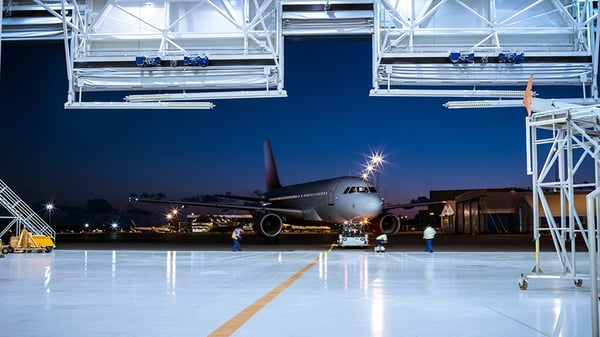 Turn that into a single technician's morning. Without Veryon Defect Analysis, tracing a repeat fault today can mean three separate logins — a shop system, an OEM portal, a fleet tracking tool — just to confirm what's already happened the day before. Forty-five minutes, and still not fully confident in the answer. With the agent doing that correlation continuously in the background, that becomes one surfaced suggestion and one reviewed decision. Multiply those minutes by every technician, every shift, across a fleet of hundreds of aircraft, and the fully loaded cost of "just go check three systems" gets enormous, quietly.
That same carrier now has 21% monthly active user (MAU) adoption of AI suggestions inside the platform, with more than 2,300 suggestions accepted and nearly 600 sent back for human review — proof the system isn't a rubber stamp. It's a second set of eyes mechanics trust enough to use and reject when it's wrong.
A single point of clustering accuracy improvement can save a million dollars in avoided delays and cancellations for a large fleet. That's the real return on catching a chronic three weeks sooner.
Faster detection is half the value of adaptive clustering. The other half is what happens once a technician is standing at the aircraft. Every fix that doesn't hold the first time is a part re-ordered, a technician re-dispatched, and more often than the industry likes to admit the same chronic recurring weeks later. That's why we built Fix Agent to surface options based on what's actually worked in the field, not a bare percentage a mechanic already knows to distrust. Better information at the point of repair means fewer repeat visits, less wasted inventory, and a first-time-fix rate that keeps climbing instead of plateauing.
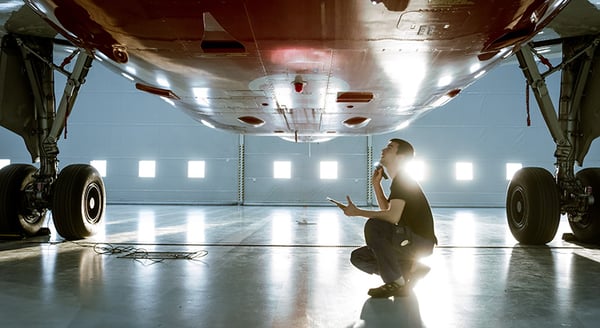 None of this works if mechanics feel like they're arguing with a black box. Every AI suggestion is scoped to what human reviewers have actually done with similar defects; never a promise, never an autonomous repair order. The agent recommends; the person still decides. That's not a limitation we're working around. It's the reason operators trust it enough to let it run at scale.
We didn't build this to replace the mechanic's judgment. We built it so their judgment gets captured, remembered, and handed to the next technician who hits the same problem — instead of starting from zero.
None of this is speculative. It's running today on fleets that decided a slow, manual process — someone going back in to retrain the model every time the data shifted — was costing them more than the discomfort of changing it. The gap between an operation that catches a defect at the gate and one that finds out three weeks later isn't a technology gap anymore — it's a decision. And every day that decision gets deferred, the fleet pays for it anyway. Quietly. One missed accuracy point, one repeat fix, one avoidable AOG at a time. The sooner you make the call, the sooner it stops costing you.
Learn more about the next generation of Veryon Defect Analysis
Explore Veryon's library of expert content and aviation insights — from maintenance tracking to diagnostics, proactive reliability, and beyond.
Every airline maintenance operation runs on the same quiet assumption: that somewhere in the noise of logbook entries, fault codes, and work orders,...
When John Koci talks with customers about aviation maintenance, he's not speaking from theory. He's speaking from experience.As Director of Customer...
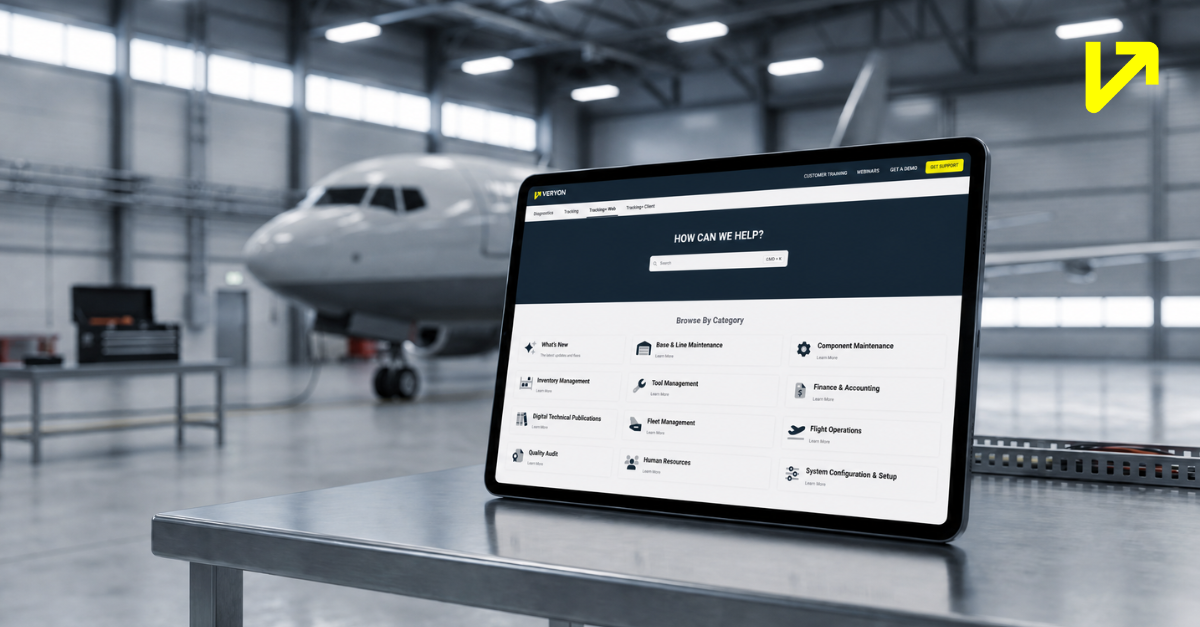
If you've ever stopped what you're doing to hunt down documentation, search for a workflow, or figure out where a setting lives in the system,...
Join thousands of aviation professionals who turn to Veryon for insights on proactive maintenance, industry innovation, and emerging tech trends.
Follow Veryon on LinkedIn and be part of the conversation driving aviation's digital transformation.