



4 min read
Ground support equipment keeps everything moving. Everyone knows that.
What's less obvious is how often it's the thing quietly slowing everything down.
Not in a dramatic way. There's no single failure you can point to. It shows up in smaller moments. A tug isn't where it's expected. A GPU is marked available but hasn't been serviced. A belt loader goes down, and by the time the right person hears about it, the delay has already started.
That's exactly the challenge Veryon is addressing with the introduction of Veryon GSE, formerly EBIS GSE.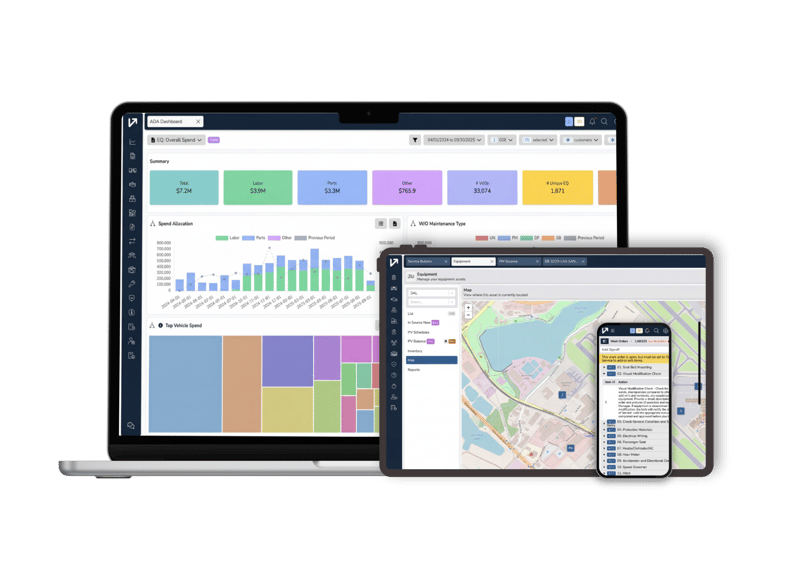
Built on capabilities gained through Veryon's acquisition of EBIS, Veryon GSE brings a more connected approach to ground support equipment asset management; extending maintenance visibility beyond the aircraft to include the equipment supporting every movement on the ground and giving teams a centralized view of asset status, parts management, maintenance schedules, and operational readiness.
With Veryon GSE, airlines and ground operations teams gain real-time visibility into the equipment that drives every turnaround, while maintenance providers and operators have access to greater control over GSE readiness and utilization behind the scenes.
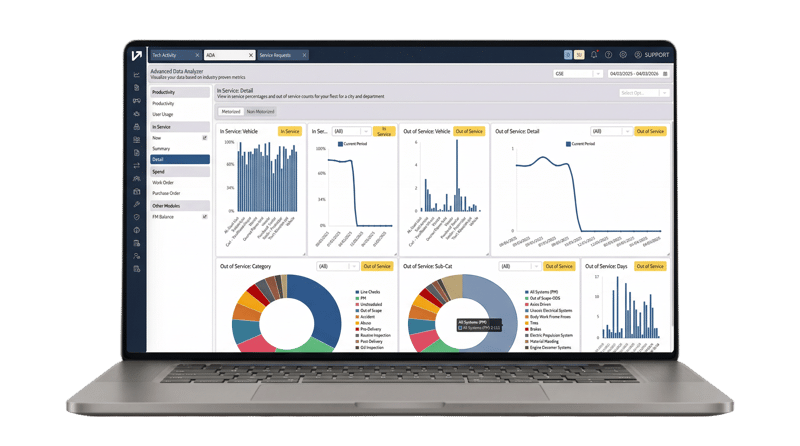
A longstanding challenge in aviation maintenance is that fragmented systems make it difficult to manage aircraft and ground assets within a single operational framework. Veryon GSE connected those pieces, making your operation easier to manage and far more predictable.
Where Ground Support Systems Actually Break Down
Most GSE challenges don't start with the asset itself. They start with how work moves around it.
In a lot of operations, the process looks like this. Someone calls in an issue. It gets written down or passed along verbally. A technician is dispatched with partial information. Updates come back the same way. Schedules get delayed.
While that works, most of the time - it leaves gaps.
Requests don't always get prioritized the way they should. Details get lost between handoffs. And once the job is done, there's often no consistent record of what happened or why.
Over time, that creates a bigger issue. Without clean, structured data, it becomes difficult to spot patterns. Repeat failures look like isolated problems. High-cost assets don't stand out until they've already become a problem.
So the same issues keep resurfacing, just in slightly different ways.
What Changes When Ground Support Workflows Are Unified
When GSE is brought into a unified system, like Veryon GSE, the shift isn't about adding complexity. It's about removing friction.
-
Service requests are tied directly to specific assets
-
Technicians have full context before they arrive
-
Work orders are created and updated automatically
-
Progress is visible in real time across teams
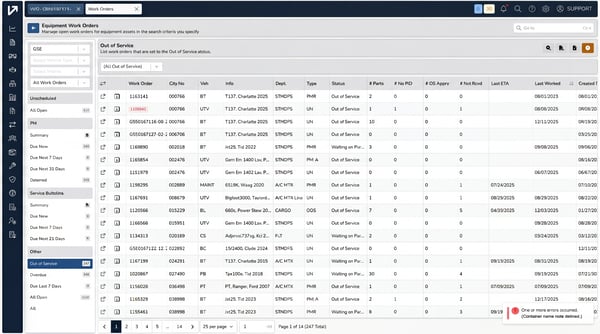
There's less guesswork. Fewer handoffs.
Supervisors can see progress as it happens. Operations doesn't have to chase updates. What used to take multiple touchpoints and a fair amount of coordination starts to move more directly.
The work itself doesn't change. But the way it moves does.
Knowing where equipment is has always been important. But location alone doesn't tell you much about how that equipment is performing.
The bigger shift happens when visibility expands into lifecycle understanding.
- How often is a unit being serviced?
- Which assets are driving the most maintenance costs?
- Where are failures repeating?
- When does it make more sense to repair vs replace?
For many teams, that information exists somewhere. It's just not easy to bring together or act on.
Once data is centralized and structured, those questions become easier to answer. Patterns start to emerge. Decisions become more grounded in actual performance instead of lore or opinion..jpg?width=600&height=337&name=ADA%20Dashboard%20-%20Device%20Mockup(2).jpg)
The Ground Support Insights That Actually Move the Needle
When teams have access to unified data, a few key insights tend to reshape how GSE is managed.
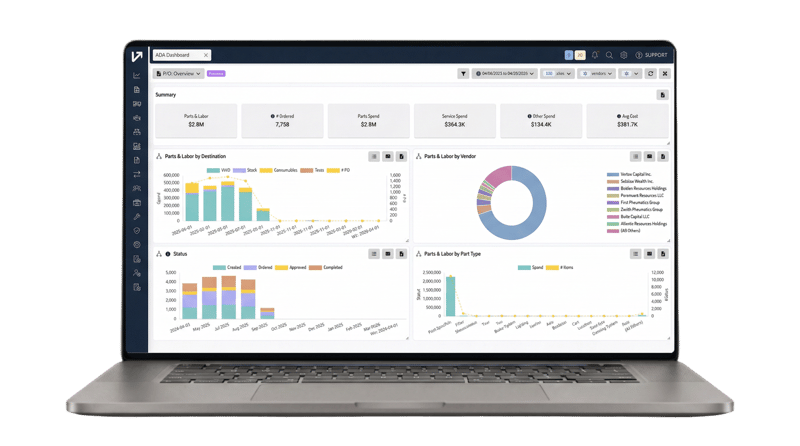
You get a clear picture of the full fleet of assets, not just what exists, but where it is, how it's distributed, and whether it's being used effectively. You start to see which assets are consuming the majority of maintenance's budget, and which ones are quietly underperforming.
Maintenance stops looking like a series of one-off fixes and starts revealing patterns. Supply chain issues become easier to trace. And decisions around repair versus replacement become easier to justify.
Individually, these insights are useful. Together, they change how decisions are made.
Instead of reacting to what's in front of you, you start to understand what's driving performance across the operation.
Why Disconnected Ground Support Systems Are Becoming Harder to Ignore
As operations grow and utilization increases, the limitations of disconnected ground support equipment management become more visible.
Teams are under pressure to move faster, reduce delays, and make better use of the resources they already have. But without a clear view of how equipment, maintenance, and operations connect, it's difficult to do any of that consistently.
That's where Veryon GSE stands apart.
.png?width=600&height=337&name=ADA%20Dashboard%20-%20Device%20Mockup(3).png) It's not just about tracking assets. It's about connecting the workflows around them. It's about bringing together maintenance activity, equipment data, and operational context into a single system that reflects how teams work.
It's not just about tracking assets. It's about connecting the workflows around them. It's about bringing together maintenance activity, equipment data, and operational context into a single system that reflects how teams work.
With that kind of structure in place, coordination improves naturally. Data becomes more reliable. And decisions are easier to make.
Veryon GSE brings these workflows together without disrupting how your teams already operate.
Where the Impact Shows Up
The results don't come from one big change. They show up across the operation.
Teams typically see:
- Faster issue resolution and less downtime
- Fewer repeat failures
- Better coordination between operations and maintenance
- Clearer visibility into asset performance and cost drivers
Technicians spend less time diagnosing and more time resolving. Equipment doesn't sit idle while teams figure out what's happening.
In an environment where minutes matter, those incremental improvements accumulate quickly.
Making the Invisible Visible in Aviation Ground Support
For many organizations, the biggest shifts happen when they can finally see everything in one place.
Not just where equipment is, but how it's being used, how it's performing, and how it connects to the broader operation.
Veryon GSE brings that visibility together, giving teams a clearer, more complete view of what's happening across the ramp.
Schedule a walkthrough to see how Veryon GSE helps reduce downtime, improve coordination, and bring more clarity to ground operations.
Want more resources?
Explore Veryon's full library of expert content and aviation insights — from maintenance tracking to diagnostics, proactive reliability, and beyond.
Stay connected
Join thousands of aviation professionals who turn to Veryon for insights on proactive maintenance, industry innovation, and emerging tech trends.
Follow Veryon on LinkedIn and be part of the conversation driving aviation's digital transformation.