

3 min read
At Veryon Ascend Dallas, one of the most grounded conversations came out of a Hangar Talk session hosted by Veryon’s Santosh Nachu, featuring Alex Talarczyk from JetsMRO.
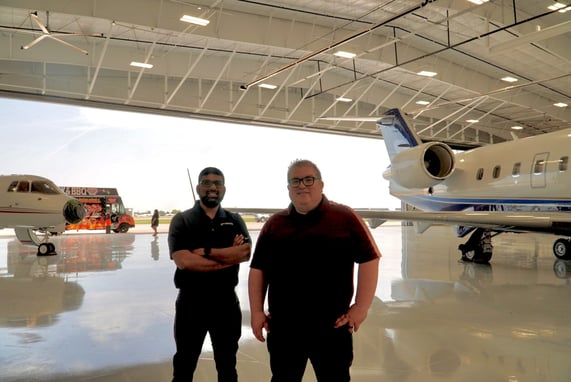
We brought together a group of local operators to dig into a question that sits at the center of every maintenance operation: what actually drives performance?
The discussion kept coming back to the same themes. Strong culture. Retention that goes beyond pay and overtime. Mechanics who feel supported and want to stay. When those pieces are in place, everything else runs better.
Hearing both hangar leadership and a Part 135 operator share real-world perspectives made the conversation practical and honest. No theory. Just what is working on the floor, and what still needs work.
Instead of big-picture trends, the discussion focused on what’s really happening inside maintenance operations today, what’s working, what’s breaking, and what separates teams that consistently perform from those that struggle to keep up.
A few themes came through clearly. And honestly, they’re less about tools or tactics, and more about how teams operate at their core.
Here are five MRO best practices worth paying attention to:
1. Transparency is becoming the expectation, not the exception
Operators don’t expect everything to go perfectly. They expect to be kept in the loop.
What frustrates them isn’t complexity. It’s silence. It’s finding out late that costs have grown or timelines have slipped with no warning along the way.
The teams standing out right now are the ones creating consistent communication rhythms. Regular updates. Clear documentation. Early visibility into issues. Even when the news isn’t great, sharing it early builds trust and gives operators time to adjust.
The difference is simple but powerful: no surprises at the end.
2. The best MRO relationships feel like an extension of the operator’s team
Maintenance doesn’t exist in isolation. For operators, every maintenance event impacts scheduling, revenue, crew planning, and customer commitments.
That’s why the strongest MRO partnerships don’t feel transactional. They feel integrated.
High-performing shops are aligning early on expectations, workflows, and communication preferences. They’re not forcing a one-size-fits-all approach. They’re adapting to how each operator runs their operation.
Because when something goes wrong, it’s not just a maintenance issue. It becomes an operational issue for the customer. The closer that alignment is from the start, the smoother everything runs.
3. Culture isn’t a talking point. It’s a performance lever
One of the more direct points from the discussion: culture matters more than experience alone.
That might sound counterintuitive in a highly technical field, but it shows up quickly in practice. Teams that prioritize the right mindset, collaboration, and accountability tend to outperform teams built purely on individual experience.
It also plays a huge role in retention. Shops that avoid burnout, limit forced overtime, and create an environment where technicians feel respected and supported are simply more stable.
And stability, right now, is a serious advantage.
4. Technician experience directly impacts operational performance
There’s a tendency to separate “people issues” from “operational issues.” The reality is they’re tightly connected.
When technicians have clear expectations, structured workflows, and the autonomy to do their job without constant friction, work moves faster and more predictably. When they don’t, inefficiencies stack up quickly.
Another key point: not every technician should be responsible for translating technical updates into customer communication. That’s a gap many organizations overlook.
The teams getting this right are building processes that support both sides, strong technical execution, and clear, consistent communication outward.
5. Better MRO visibility is what keeps improving process efficiency
Maintenance will always be unpredictable. Findings change scope. Parts get delayed. Work expands.
There’s no perfect way to eliminate that variability. But there is a better way to manage it.
The difference comes down to how early teams can see what’s happening and how clearly they communicate it. Breaking work into defined steps. Setting realistic expectations up front. Tracking progress in a way that’s visible to both internal teams and customers.
When that visibility is in place, decisions get made faster, delays are easier to manage, and the entire operation feels more controlled, even when the work itself isn’t.
What It Takes to Stay Ahead in Today’s MRO Environment
What stood out from this conversation is that the gap between average and high-performing teams isn’t about working harder. It’s about operating with more intention in order to improve MRO processes.
The teams pulling ahead are the ones building clarity into their processes, creating consistency in how they communicate, and investing in environments where technicians can actually do their best work. They’re not eliminating complexity. They’re managing it better, with fewer surprises and tighter alignment across the board.
That shift in MRO best practices is raising expectations across the industry. And it’s forcing a rethink of how maintenance organizations scale performance without adding friction.
That’s also where technology is starting to play a more meaningful role.
Solutions like Veryon Work Center, formerly EBIS MRO, are designed to bring that operational visibility and structure into the day-to-day workflow. Purpose-built for Part 145 repair stations, service centers, and MRO organizations, it streamlines structured maintenance workflows across work orders, labor tracking, scheduling, compliance, invoicing, and documentation, giving teams greater operational control. By bringing planning, execution, and recordkeeping into a unified digital environment, it helps maintenance providers operate more efficiently and stay audit ready.
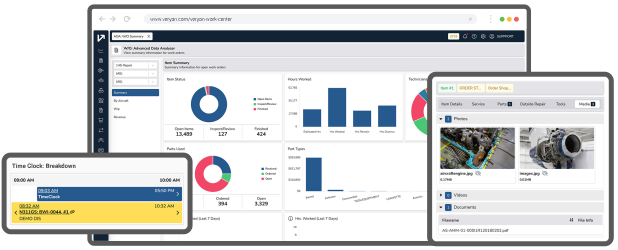
If you’re looking to streamline operations, improve visibility, and create a more proactive maintenance environment, it’s worth seeing how that comes together in practice.
Schedule a demo to see how Veryon Work Center can support your operation.
Because at this point, it’s not just about keeping aircraft moving. It’s about building operations that can keep up with where the industry is going.