



Skip to the main content.

Check out our new buyer's guide

We advise how to successfully evaluate and select a modern maintenance platform.

DOWNLOAD GUIDE

What We're Up To


Veryon Elevates Customer Success Through Its Fleet Performance Partnership

Veryon announces Fleet Performance Partnership

The partnership delivers hands-on support, training, and the strategic guidance customers need to unlock lasting operational value..

FIND OUT MORE

BUYERS GUIDE

Maintenance Intelligence Solutions

Learn how to identify solutions that help business aviation teams uncover recurring defects, analyze maintenance history across the fleet, and act earlier to reduce AOG risk and improve aircraft availability.

Introduction

Recurring defects are one of the biggest hidden drivers of operational disruption in business aviation. What starts as a minor discrepancy can quickly evolve into repeat troubleshooting, unnecessary parts replacement, delayed departures, and costly AOG events if patterns are not identified early enough.

At the same time, maintenance organizations are operating under growing pressure. Aircraft utilization remains high, fleets continue to age, labor shortages persist, and maintenance teams are expected to improve aircraft availability with fewer resources and tighter schedules.

Traditional maintenance tracking systems were not designed to identify recurring defect patterns buried across years of logbook data, inconsistent technician write-ups, and disconnected workflows. That gap is driving many operators to evaluate a new category of maintenance intelligence solutions focused on defect detection, reliability visibility, and faster maintenance decision-making.

This guide is designed to help business aviation operators evaluate defect analysis platforms by outlining the operational capabilities, workflow requirements, and business outcomes that matter most when selecting a solution.

Predicting the fix before the failure

How Directors of Maintenance reduce AOG risk


A Director of Maintenance (DOM) starts the day with aircraft scheduled, crews assigned, and trips planned. But the real question isn’t what’s on today’s schedule. It’s what happened overnight, what patterns are emerging in the logbooks, and which maintenance issues are quietly building beneath the surface.

This role lives in the space between certainty and consequence. Some aircraft fly nearly every day. Others sit for weeks, then suddenly get tasked for a high-profile trip with no margin for error. The fleet is mixed. Utilization is uneven. Expectations are high and rarely flexible.

Every decision carries weight. Assign the wrong aircraft, and a routine trip becomes an aircraft-on the-ground (AOG) with an owner watching the clock. Miss a repeat defect buried under inconsistent logbook language, and a manageable issue turns into a reactive scramble. Spend too much, and leadership asks questions. Spend too little and the risk shows up somewhere inconvenient and expensive.

What keeps DOMs up at night isn’t compliance checklists or inspection calendars. It’s an unknown pattern. The defect showed up twice, but didn’t look the same either time. The vendor repair that closed the logbook entry without actually fixing the problem. The spreadsheet that says everything’s under control until suddenly it isn’t.

This is a job defined by judgment calls made with imperfect information. And it’s why the first moments of the day matter more than most people realize.


7:30 A.M. | MORNING FLEET READINESS CHECK

By 7:30 a.m., the DOM is already inside the first critical decision window of the day. Overnight squawks are open. Logbook entries from late arrivals and early departures are still being reviewed. Aircraft scheduled for high priority trips need to be cleared with confidence, and the team needs to know which issues are isolated and which may point to a larger pattern.

A few discrepancies stand out. One aircraft reports an oil leak. Another notes external seepage. A third mentions fluid on the cowling during post-flight. None of them appear urgent on their own. But together, they raise a familiar question: is this coincidence, or the beginning of a recurring issue?

THE PAIN POINT: MANUAL PATTERN DETECTION


This is where manual reliability tracking starts to crack.

Logbook entries are inconsistent by nature. One technician writes exactly what they see. Another summarizes what they think it means. Abbreviations vary. Typos happen. ATA codes may not always line up cleanly. The DOM is forced to rely on memory, manual searches, and spreadsheet history to determine whether separate issues are actually connected.

Searching for related issues can take 20 minutes per tail. By the time the morning standup arrives, 30 to 45 minutes may already be gone just trying to answer a basic question: Is this recurring?

Worse, by the time a pattern becomes obvious or is detected, only after the aircraft has gone AOG. At that point, the spreadsheets are no longer helping the team, its just documenting hindsight.

HOW VERYON DEFECT ANALYSIS CHANGES THE START OF THE DAY

Veryon Defect Analysis removes the guesswork from the morning readiness check.

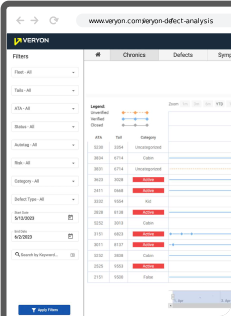
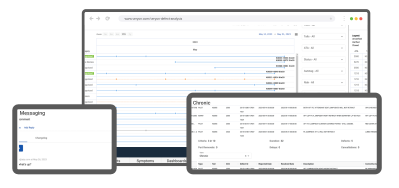
AI-powered clustering automatically groups related defects, even when technicians describe the same underlying issue in different ways. Instead of manually comparing logbook language, ATA codes, and corrective actions, teams can quickly see whether a discrepancy is isolated or part of a recurring pattern.

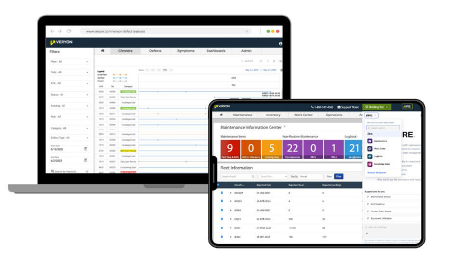
Dashboards surface active issues across the fleet, so maintenance leaders can prioritize what needs attention, review historical outcomes, and understand which aircraft may require closer monitoring before the day’s schedule begins.

Fleet-to-tail drilldowns make it easier to move from a high-level reliability view into a specific aircraft’s defect history in seconds, giving teams the context they need before maintenance, dispatch, or vendor decisions are made.

Asset 3
Asset 6

With Veryon Defect Analysis, the morning standup stops being about deciphering scattered data and starts being about deciding where to act first.


11 A.M. | PRE-TRIP PLANNING & SCHEDULING

Late morning brings a meeting with operations. The weekly flight schedule is on the screen. A high-priority trip is coming up in the next few days. The timeline is tight. Expectations are high. And there is no backup plan that will be simple, inexpensive or easy to explain. The question is straightforward, but loaded: which aircraft can be assigned with confidence?

THE PAIN POINT: THE UTILIZATION GAP


On paper, several tails may look acceptable. Inspections are current. No critical deferred items are open. Nothing obvious appears to block the trip. But the record does not always show how the aircraft has actually been used.

One aircraft may have flown 100 hours during that period. Another may have flown 10. A repeat-defect view based only on calendar windows can treat those aircraft the same, even though their operating profiles and wear patterns are completely different.

Low-utilization aircraft can hide emerging issues for months. High-utilization aircraft can generate noise that looks alarming without the right context. To compensate, DOMs and maintenance teams often cross-check flight hours, cycles, recent squawk history, and corrective actions manually while operations waits for a decision.

These are multi-thousand-dollar availability decisions being made without utilization-aware insight. The risk isn’t theoretical. It shows up on the ramp.

HOW VERYON DEFECT ANALYSIS ADDS UTILIZATION CONTEXT

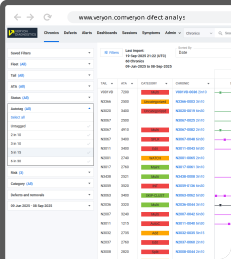
Veryon Defect Analysis normalizes defect trends by hours and cycles, not just calendar days. Data is reviewed in the context of how each aircraft actually flies, helping teams understand whether a discrepancy is isolated or part of a recurring issue.

Usage-aware thresholds allow operators to define what “recurring” really means for their operation. Two events in 15 hours may be significant for a high-use aircraft. Three events in 25 cycles may be more telling for another.

Tail-level baselines show what’s normal for each aircraft, making true outliers immediately visible. Predictive risk scoring highlights rising defect trends before they impact dispatch reliability.

Asset 1
Bulb-icon@2x

The result is confidence rooted in operational context, not optimism.

2 P.M. | AOG CRISIS RESPONSE

Mid-afternoon, the call comes in. An aircraft is AOG at an outstation. Hydraulic issue. Again.

The DOM is immediately in decision mode. Every hour grounded creates cost, disruption, and pressure. In many business aviation operations, an AOG event can represent tens of thousands of dollars per aircraft per day in lost revenue repositioning, and recovery costs. The reputational impact with the owner or customer is harder to measure, but everyone feels it.

The question comes quickly: wasn’t this system worked on two weeks ago? And was that corrective action supposed to hold?

THE PAIN POINT: TRIAL-AND-ERROR TROUBLESHOOTING


Historically, this is where response slows down. Logbooks are searched. Technicians are called. Vendors are looped in. Everyone is trying to determine whether this is a new issue, a repeat event, or the result of a prior fix that did not hold.

Without clear visibility into past corrective actions and outcomes, troubleshooting becomes harder than it needs to be. Parts may be ordered “just in case.” Technicians are forced to make judgment calls without a complete view of what has already been tried. The maintenance team spends valuable time rebuilding context while the aircraft remains grounded.

Instead of starting with the most relevant history, the team is firefighting.

HOW VERYON DEFECT ANALYSIS ACCELERATES RECOVERY

Veryon Defect Analysis quickly surfaces the relevant defect history across the fleet and the specific tail. Prior occurrences, related discrepancies, corrective actions, and outcomes are visible in one place.


Corrective actions are shown alongside time-to-recurrence data, making it clear which fixes actually worked and which ones failed quickly. Technicians can read original narratives from past events, not just summaries stripped of context.

Decisions shift from reactive to deliberate. The team executes the fix with the highest likelihood of holding.

Asset 2

4 P.M. | MAINTENANCE EFFECTIVENESS REVIEW

As the immediate crisis settles, attention turns inward. A recurring avionics issue has been addressed multiple times in recent months. Some work was handled internally. Some was sent to an external vendor. The aircraft returned to service each time, but the issue kept coming back.

Now the team needs to understand why.

Logbook entries, corrective actions, work history, and vendor notes are reviewed together to answer a more strategic question: did the repair solve the issue, or simply close the record?

THE PAIN POINT: THE BLACK BOX OF REPAIRS


Without clear data, it’s hard to know what’s really driving repeat maintenance events. Is this a training issue? A parts quality problem? A vendor that closed the discrepancy without addressing the underlying cause?

Internal teams can’t be coached effectively. Vendors can’t be held accountable without objective evidence. Decisions abou where work should live are based on instinct rather than evidence.

HOW VERYON DEFECT ANALYSIS CREATES ACCOUNTABILITY

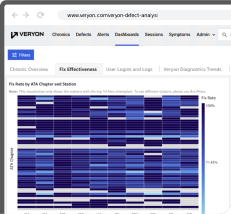
Veryon Defect Analysis helps teams identify which corrective actions resolved the issue and which were followed by repeat events. Repeat event analysis shows how quickly defects return after a repair, giving maintenance leaders a clearer view of fix effectiveness across aircraft, systems, and service providers.


With better visibility into repeat defects, corrective actions, and outcomes, operators can make more informed decisions about whether work should remain internal, move to a different MRO, or be escalated to the OEM.

Asset 4
Bulb-icon@2x

Veryon Defect Analysis helps operators improve fix effectiveness, reduce repeat maintenance effort, and make more confident decisions about internal work, vendor performance, and OEM escalation.

6 P.M. | LEADERSHIP & OWNER UPDATE

The day ends with reporting. A monthly update for leadership and owners is due.

THE PAIN POINT: ISOLATED DATA & UNCLEAR ROI


Preventive maintenance is hard to explain when success looks like nothing is happening. Without clear benchmarks, trend data, or cost-avoidance context, Directors of Maintenance are left to justify proactive decisions with partial evidence.

Leadership wants numbers. Maintenance often has anecdotes. When defect history, corrective actions, vendor performance, and reliability trends live in separate places, it becomes difficult to show what improved, what risk was reduced, and where maintenance decisions protected aircraft availability

HOW VERYON DEFECT ANALYSIS MAKES VALUE VISIBLE

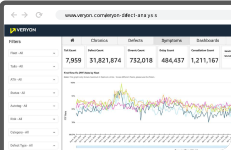
Veryon Defect Analysis gives operators a centralized view of recurring defects, corrective actions, and reliability trends. Benchmarking helps compare fleet reliability against similar operators, while dashboards make it easier to show changes in repeat defect rates, fix effectiveness, and maintenance outcomes over time.

Reporting can help quantify the value of reduced repeat defects, the avoidance of unnecessary maintenance actions, improve scheduling predictability, and better aircraft availability. Instead of relying on anecdotes, maintenance leaders can bring executive-ready visuals that translate reliability performance into business impact.

The result is a clearer story for leadership: where risk was reduced, where downtime was avoided, and where maintenance decisions created measurable value.

Bulb-icon@2x

With Veryon Defect Analysis, maintenance leaders can turn recurring defect trends, corrective-action outcomes, and reliability improvements into a clearer business case for reducing downtime risk and protecting aircraft availability.

Asset 5 1


How predicting the fix reduces AOG risk


At the end of the day, the job itself hasn’t changed. The responsibility is still there, the expectations are still high, and the aircraft will continue to fly on uneven schedules that don’t politely align with maintenance calendars. What has changed is the amount of uncertainty behind each decision.


RAPID DEFECT DETECTION

The first shift shows up early, when repeat issues stop hiding in plain sight. Teams no longer need to spend hours manually surfacing reports and analyzing spreadsheets; the patterns surface on their own, even when technicians describe the same problem in different ways. A hydraulic seep, fluid residue near the actuator, or repeated write-ups for low reservoir levels no longer appear as isolated events. They resolve into one issue that deserves attention before it escalates.

When operators can identify a defect as early as the second repeat or occurrence, it often makes the difference between scheduling a controlled fix and dealing with an AOG. In an environment where data volume is limited and teams are lean, rapid defect detection turns uncertainty into something manageable rather than something that waits to surprise everyone.


PROACTIVE, USAGE-BASED PLANNING

The ability to evaluate maintenance history in the context of actual aircraft usage carries into planning conversations as well. Pre-trip scheduling stops relying on what looks acceptable on a calendar and starts reflecting how each aircraft actually flies. High-utilization aircraft are evaluated in context rather than flagged prematurely, while low-use tails no longer quietly accumulate risk just because they haven’t flown much lately.

When maintenance planning is tied to hours and cycles instead of arbitrary time windows, decisions feel grounded rather than cautious. Aircraft assignments become easier to defend because they’re based on real usage patterns. Over time, this is what quietly improves availability without introducing unnecessary risk.


FLEET-TO-TAIL VISIBILITY AND CONFIDENCE

The greatest impact is seen during troubleshooting, when time and context matter most. An AOG no longer triggers a memory test or a scramble through old logbooks. The full history is already visible, from fleet-level trends down to tail-specific corrective actions, along with clear evidence of what worked and what didn’t.

That same visibility changes day-to-day conversations. Technicians know what fixed the issue last time. Vendor discussions are grounded in outcomes instead of opinions. Leadership updates rely on numbers rather than anecdotes. Confidence grows because decisions can be explained, defended, and repeated.


WHAT CHANGES BY THE END OF THE DAY

The workload doesn’t disappear, and the pressure never really lets up. But decisions feel different because teams can see what has happened before, what corrective actions worked, and where risk is beginning to build. There is less guessing, fewer assumptions, and more confidence that problems are being addressed before they turn into emergencies.

Rapid defect detection, proactive usage-based planning, and fleet-to-tail visibility doesn't eliminate risk. They make it visible, understandable, and controllable. For a DOM, that shift takes you from constant reaction to proactive maintenance.

From Repeat Defects to Reliable Uptime

Calculate Your Defect Analysis ROI 


Aviation maintenance teams must balance uptime with cost control, yet the biggest losses rarely comefrom major failures. Instead, recurring minor defects that go undetected drive costly AOG events.

Most disruptions trace back to repeat issues that were previously reported but not fully resolved. These signals are buried in inconsistent logbook data and manual processes, making patterns difficult to detect across aircraft, time, or locations.

Operators invest in advanced analytics but still face preventable AOGs, not because the problem is complex, but because visibility is limited. The data exists, but it is fragmented and unstructured.

By turning maintenance data into structured insight, teams can catch repeat defects earlier, reduce downtime, and improve ROI. This guide explores how proactive defect analysis makes that possible.


The 90-day acceleration: Compressing time-to-value

Defect Analysis is designed to deliver value quickly without requiring process changes, additional headcount, or new workflows. Within the first 90 days, operators move from searching for answers to acting on clear patterns in their maintenance data.


Weeks 1–2: Immediate visibility into your maintenance history

  • Instantly search and review past discrepancies and corrective actions across your fleet in one place.
  • Eliminate time spent manually pulling logbooks or cross-referencing multiple systems.
  • Begin identifying recent issues that may not have been fully resolved.
What This Means: Teams can answer basic questions faster without relying on memory, spreadsheets, or fragmented records.


Weeks 3–4: Start recognizing repeat issues earlier

  • Surface recurring issues across aircraft, even when recorded differently
  • Identify when a “one-off” discrepancy is actually part of a broader pattern
  • Gain visibility into how often issues are repeating and when they are occurring
What This Means: Teams start connecting the dots automatically, recognizing repeat problems earlier instead of after multiple troubleshooting cycles.


Months 1-2: Improve troubleshooting and reduce repeat work

  • Reference prior corrective actions tied to recurring issues
  • Avoid repeating ineffective troubleshooting steps
  • Prioritize issues that are more likely to impact operations

What This Means: Technicians resolve issues faster, and maintenance teams spend less time re-diagnosing the same problems.


Months 2-3: Build a foundation for more reliable operations

  • Develop clearer visibility into recurring defects across the fleet
  • Improve consistency in how issues are diagnosed and resolved
  • Begin reducing avoidable disruptions tied to repeat defects

What This Means: Operators gain better control over recurring issues, setting the foundation for improved aircraft availability over time.

Quantifying ROI through increased uptime


Defect Analysis delivers value faster than most maintenance tools. When the right fix is applied the first time, the team stops paying for the same diagnosis twice. Technicians can stop spending hours cross-referencing logbooks manually, and maintenance managers can stop rebuilding the same spreadsheets every week.

For business aviation operators, canceled trips and missed meetings make a lasting impression. Chronic defects damage trust and affect contract renewals and referrals, even if they don’t show up in the maintenance budget.

Veryon Defect Analysis supports more than 25% of the world’s commercial fleet. Commercial aviation operators have seen up to a 25% reduction in downtime across their fleet, reducing the chances of AOG events and saving up to hundreds of thousands in costs with:

33%

Fewer chronic defects

10%–12%

Increase in aircraft availability

Actionable insights within weeks, not months or years


Quantifying-ROI-image-1@2x


What this means for maintenance and ops teams


Maintenance and operations teams working on mixed fleets under lean staffing conditions don’t need another system to monitor. What they need are faster, more confident answers to the questions that drive every shift, and working with clear patterns gives them that, rather than relying on memory or fragmented records.


Faster answers to critical questions


Maintenance tracking systems capture what happened. Defect Analysis reveals what it means. Together, they enable maintenance teams to move beyond individual records and understand how issues are repeating across time, aircraft, and operating conditions. For example:

“Is this aircraft ready for the trip?”

  • Maintenance tracking systems show current discrepancies and recent write-ups.
  • Defect Analysis adds critical context: whether similar issues occurred previously, how often they repeat, and whether prior corrective actions were effective.
  • Teams can then access both the aircraft’s current status and underlying risks before dispatch.
 

“Is this a one-time issue or part of a larger pattern?”

  • Individual log entries rarely tell the full story.
  • Defect Analysis connects related discrepancies across aircraft over time, making it easier to recognize recurring issues.
 

“Are we fixing problems, or just addressing the symptoms?”

  • Tracking systems document corrective actions.
  • Defect Analysis links those actions to recurring defect patterns, helping teams understand which fixes resolved the issue and which ones led to repeat write-ups.
  • This reduces repeated troubleshooting and improves repair effectiveness over time.

Improved decision confidence


Veryon AIRE’s maintenance intelligence provides real-time, repetitive issue reports and proactive insights, ensuring the team always works from the latest information.

Maintenance tracking systems provide the operational record of what has been logged, deferred, and completed. Defect Analysis builds on that foundation by connecting those records into meaningful patterns. When recurring issues are clearly identified and contextualized, maintenance teams can make more consistent, informed decisions. Instead of reviewing discrepancies in isolation, teams can understand how often an issue is repeating, where it occurs, and how it has been addressed. This reduces the need to manually reconcile information across systems or rely on fragmented history. Decisions are based on connected data rather than individual entries.

For maintenance leadership, this provides a more complete view of recurring issues across the fleet without requiring manual analysis. Patterns that would otherwise take hours to uncover are surfaced automatically, enabling more proactive oversight and prioritization.


Reduced reliance on guesswork and tribal knowledge


Maintenance tracking systems store historical records, but their interpretation often depends on the experience of those reviewing them. In many operations, the ability to recognize repeat issues or recall what resolved them previously is concentrated among a small number of experienced technicians. When that knowledge is unavailable, troubleshooting becomes less efficient and more variable.

Defect Analysis reduces this dependency by structuring historical data into identifiable defect patterns, then linking them to prior corrective actions. Instead of relying on memory or informal knowledge transfer, teams can reference a consistent, system-driven view of previous fixes and strategies. Technicians can troubleshoot more efficiently and consistently, regardless of experience level, while operations teams reduce repeat disruptions by addressing underlying issues earlier.


The closed loop advantage: Veryon Tracking & Veryon Defect Analysis


Operators already using Veryon Tracking1 have a distinct advantage by adding Veryon Defect Analysis. Veryon Tracking records maintenance data across operations. Defect Analysis interprets that data and identifies patterns.

Every discrepancy logged in Veryon Tracking feeds directly into Veryon Defect Analysis. Together, they connect discrepancies, patterns, and corrective actions to create a closed loop. You’ll always know what worked and what didn’t.

There’s no need to manage them as two separate systems. Defect Analysis automatically uses the data already captured in Veryon Tracking. Technicians don’t have to change a thing about how they work. The real difference shows up in what management can finally see.

If Veryon Tracking is where your fleet’s maintenance story gets written, Veryon Defect Analysis is how you read it for patterns and risks.

Closed Loop Advantage


Get-White-Paper@2x

Discover more about building the business case for a unified aviation maintenance suite.

See the true cost of recurring defects


Recurring defects rarely show up as one major maintenance event. Instead, they quietly drive repeat troubleshooting, unnecessary parts replacement, delayed departures, and avoidable downtime over time. Because those costs are spread across multiple work orders, technician hours, and operational disruptions, the true impact is often difficult to measure. For many operators, repeat squawks become an invisible drain on aircraft availability, labor efficiency, and maintenance resources. Teams spend valuable time chasing the same issues while critical patterns remain buried inside disconnected maintenance records.


The problem: Hidden defects quietly drain resources


Across business aviation, maintenance teams are being asked to do more with leaner resources, aging fleets, and higher aircraft utilization. Yet many organizations still rely on manual review or tribal knowledge to identify recurring issues. As a result, operators often:

  • Miss early warning signs hidden in maintenance data 
  • Spend hours manually reviewing historical discrepancies 
  • Re-solve the same problems repeatedly 
  • Replace parts without fully addressing root causes 
  • Experience avoidable downtime tied to unresolved defects 
Earlier visibility into recurring discrepancies helps maintenance organizations move from reactive troubleshooting to faster, more informed decision-making.

    1. Input your fleet size, utilization, delay rates, and parts spend
    2. Adjust assumptions to reflect how your operation actually runs
    3. See projected savings across reduced delays, fewer repeat fixes, and avoided AOG events
Try-ROI-Calculator-image-1@2x

Real-world operational impact


Operators implementing proactive defect analysis strategies report measurable improvements across maintenance operations, including:

  • Fewer repeat write-ups 
  • Faster troubleshooting and root cause identification
  • Better labor and parts allocation 
  • Improved maintenance coordination
  • Stronger visibility into recurring discrepancies 
  • More informed maintenance decision-making 

These outcomes reflect the growing shift across business aviation toward connected defect intelligence that helps maintenance teams identify problems earlier, act faster, and operate with greater confidence.


The growing adoption of defect intelligence

Why more than 300 business aircraft now rely on Veryon Defect Analysis


Business aviation operators are under growing pressure to do more with less. Fleets are aging, aircraft utilization remains high, maintenance teams are stretched thin, and every hour of unscheduled downtime carries operational and financial consequences. Across the industry, operators are recognizing that traditional maintenance tracking alone is no longer enough to stay ahead of recurring issues that quietly drive AOG events, repeat troubleshooting, and unnecessary parts replacement.

That shift is exactly why more operators are adopting Veryon Defect Analysis as part of a broader move toward predictive, data-driven maintenance strategies.

Today, Veryon Defect Analysis supports more than 25% of the world’s commercial fleet and, with its expansion into business aviation, now includes more than 300 business aircraft worldwide. Adoption is accelerating among operators who need earlier insight into repeat defects, stronger reliability visibility, and faster maintenance decision-making across complex operations.

For Jet Linx Aviation, the challenge was scale and operational complexity. Managing approximately 100 aircraft across a multi-base operation under both Part 91 and Part 135 regulations required more than disconnected maintenance systems and manual defect tracking. After evaluating multiple maintenance platforms, Jet Linx selected Veryon Tracking and Veryon Defect Analysis to modernize its maintenance and reliability program through a more unified, data-driven approach. By centralizing maintenance workflows and adding AI-powered defect intelligence, the organization gained greater visibility into recurring discrepancies, improved troubleshooting consistency, and stronger fleet-wide maintenance coordination.

For flyExclusive, aircraft availability was the driving force. Operating a high-utilization charter fleet means unscheduled maintenance directly impacts revenue and customer experience. The maintenance team needed a faster way to identify chronic issues hidden inside years of historical logbook data. By deploying Veryon Defect Analysis across its fleet of more than 100 aircraft, flyExclusive can now surface recurring defects in real Time, normalize inconsistent technician write-ups, and make maintenance decisions faster without relying on hours of manual record review. The result is a more proactive maintenance operation focused on reducing disruption before it impacts the schedule.

For air medical operators like Life Link III, Apollo MedFlight, and Intermountain Health, the stakes are even higher. In HEMS environments, aircraft availability directly supports life-saving missions where delays are not an option. These organizations expanded their partnerships with Veryon to deploy Veryon Defect Analysis across their rotorcraft fleets, using advanced defect intelligence to strengthen maintenance planning, improve visibility into repeat issues, and reduce exposure to unscheduled downtime.

For Apollo MedFlight, gaining a deeper understanding of long-term maintenance history was a key driver. By applying defect intelligence across years of historical maintenance data, the organization uncovered recurring discrepancies and systemic maintenance patterns that were difficult to identify through traditional tracking methods alone. The additional visibility helped maintenance teams better understand chronic issues across the fleet, improve troubleshooting consistency, and support more informed reliability planning and maintenance decision-making.

Life Link III saw similar value in integrating defect intelligence directly into existing maintenance workflows. As an existing Veryon Tracking customer, discrepancies entered once into the system can now be analyzed automatically through Veryon Defect Analysis to surface recurring patterns earlier and support more confident maintenance actions across geographically distributed operations.

For Intermountain Health, the expansion was driven by operational scale and standardization. Following the unification of multiple HEMS providers into Intermountain Health Flight and Ambulance Services, the organization expanded its use of Veryon Tracking and deployed Veryon Defect Analysis to support a more proactive, data-driven maintenance strategy across its growing fleet. By consolidating maintenance data, standardizing workflows, and applying advanced defect intelligence across more than 50 additional aircraft, Intermountain Health improved operational consistency, strengthened maintenance visibility, and enhanced decision-making across a larger and more complex aviation operation.

Across every deployment, the common thread is clear: operators are moving away from reactive maintenance environments where repeat issues stay buried inside disconnected records and tribal knowledge. Instead, they are investing in connected systems that can interpret maintenance history, identify recurring patterns earlier, and help teams make faster, more informed decisions before operational disruptions occur.

For many operators, defect intelligence is no longer viewed as a future-state innovation. It is becoming a foundational capability for maintaining aircraft availability, improving troubleshooting efficiency, and scaling maintenance operations with greater confidence.


Defect Analysis solution evaluation checklist

What to look for when evaluating reliability & defect intelligence platforms

As recurring defects, unscheduled downtime, and technician shortages continue to pressure maintenance organizations, operators are increasingly evaluating defect analysis platforms to improve reliability and aircraft availability.

Use this checklist to assess whether a solution can support real-world maintenance operations, not just reporting.


Data & defect intelligence

Evaluate whether the platform can:


Operational Workflow Integration

Evaluate whether the solution can:


Maintenance Efficiency & Downtime Reduction

Evaluate whether the platform can help improve operational performance by:


Fleet Scalability & Operational Complexity

Evaluate whether the solution is designed to support:


Compliance & Maintenance Confidence

Evaluate whether the platform can:


Scoring your maintenance reliability maturity

Use the checklist results to assess where your maintenance organization stands today and where operational gaps may still exist.


0–10 CHECKS

REACTIVE MAINTENANCE ENVIRONMENT
Your organization is likely relying heavily on manual troubleshooting, tribal knowledge, and historical logbook review. Recurring defects may be difficult to identify consistently, increasing exposure to repeat discrepancies, AOG events, and maintenance inefficiencies.


11–20 CHECKS

FOUNDATIONAL RELIABILITY PROCESSES IN PLACE
Your team has established maintenance controls and visibility but may still struggle with disconnected systems, inconsistent defect tracking, or limited insight into recurring issues. There is an opportunity to improve troubleshooting speed, fleet-wide visibility, and maintenance standardization.


21–30 CHECKS

CONNECTED RELIABILITY OPERATION
Your organization appears to have established many of the foundational processes needed for effective defect management. However, even mature maintenance programs can benefit from advanced defect analysis capabilities that automate trend detection, identify recurring issues sooner, and help maintenance teams make faster, more informed decisions.


31+ CHECKS

ADVANCED RELIABILITY INTELLIGENCE OPERATION
Your organization is operating with a mature reliability strategy supported by integrated maintenance intelligence, proactive defect visibility, and faster operational decision-making. Teams can identify emerging issues earlier, reduce operational disruption, and scale maintenance operations more effectively across the fleet.


Questions to ask vendors


Not all defect analysis platforms are built for real-world aviation maintenance operations. As you evaluate solutions, these questions can help distinguish reporting tools from operational reliability platforms.


1. DATA & AI CAPABILITIES
  • How does the platform identify recurring defects when technician write-ups differ?
  • Can recurring issues be surfaced automatically across the fleet?
  • How early can repeat defects typically be identified?
  • Can the system analyze years of historical maintenance records?

2. WORKFLOW INTEGRATION
  • Does the platform integrate directly with existing maintenance tracking systems?
  • Will technicians or controllers need to enter data into multiple systems?
  • How are insights surfaced inside daily maintenance workflows?
  • Can maintenance teams move directly from insight to corrective action?
  • How does the platform support multi-base operations?

3. OPERATIONAL IMPACT
  • What measurable operational outcomes have customers achieved?
  • How does the platform help reduce troubleshooting time?
  • Can the solution help reduce repeat discrepancies or AOG events?
  • How does the system improve aircraft availability?
  • What KPIs do operators most commonly improve after deployment?

4. SCALABILITY & FLEET SUPPORT
  • Does the platform support mixed fleets and multiple aircraft types?
  • Is the solution designed for Part 91 and Part 135 operations?
  • Can it support high-utilization charter or HEMS environments?
  • How does the platform scale as fleets grow?

5. IMPLEMENTATION & ADOPTION
  • How long does implementation typically take?
  • What level of historical maintenance data is required?
  • How are users trained?
  • What ongoing customer support is provided?
  • Are customer success or reliability experts included post-deployment?

6. VENDOR EXPERTISE & INDUSTRY EXPERIENCE
  • Does the vendor have experience supporting aviation maintenance organizations?
  • Are there customer examples from similar operational environments?
  • How widely adopted is the solution across aviation?
  • What is the long-term product roadmap for AI and reliability intelligence capabilities?
  • How does the vendor incorporate customer feedback into product development?

Let's get you more uptime

Every month that repeat defects go unrecognized is another month of preventable downtime.

Veryon Defect Analysis helps operators identify recurring issues earlier, reduce repeat work, and keep more aircraft in service, turning maintenance data into faster, more confident decisions. See it for yourself by booking a demo.

Not ready for a demo?

Reach out to the team with any questions, or get a quote to understand our pricing.

Talk to Sales
Get a Quote