


6 min read
Modern aviation maintenance isn’t struggling because teams lack experience or commitment. It’s struggling because the systems supporting them haven’t kept pace with how operations actually run today.
Maintenance is also one of the most expensive parts of running a fleet. Between labor, parts, compliance, and downtime, it can account for as much as 10–20% of an operator’s direct costs. When systems are fragmented, those costs quietly climb.
Fleets are aging. Utilization is higher. Teams are leaner. Regulatory pressure hasn’t eased. Yet many maintenance organizations are still relying on tools that were built for a slower, simpler operating environment.
If you’re responsible for maintenance, this likely feels familiar. Your team knows the work. Your aircraft are capable. The friction shows up elsewhere.
Work orders live in one place. Inventory is managed somewhere else. Publications and compliance context needed to ensure adherence to FAA/EASA regulations and internal procedures sit off to the side. Sign-offs happen after the work is done. Getting a clear picture of aircraft status often means pulling reports, tracking down notes, or waiting on updates that are already out of date.
By the time everything is reconciled, you’ve lost time you can’t get back.
That’s not a staffing problem. It’s a maintenance management problem.
The way maintenance is tracked directly shapes how clearly you see fleet readiness, how efficiently work gets executed, and how confidently decisions are made. Veryon Tracking was built to address that foundation, not by digitizing paperwork, but by acting as the operating system for modern maintenance.
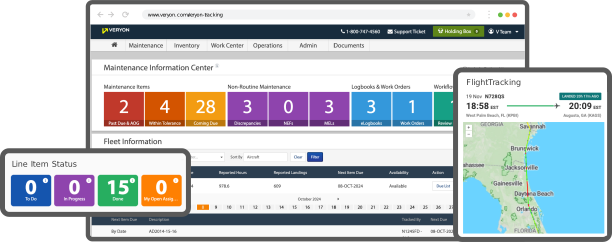
Instead of forcing teams to work around disconnected tools, Veryon Tracking brings maintenance records, inventory, work execution, publications, and intelligence together in a single, integrated platform. When everything lives in one place, work moves faster and costs stay under control and enables real-time visibility into status of the fleet.
Here are the five capabilities that matter most when evaluating a maintenance tracking platform today.
1. A unified record that eliminates fragmentation
Fragmentation is one of the biggest hidden drains on maintenance performance. When records, configurations, publications, and compliance data live in separate systems, teams spend enormous amounts of time reconciling information instead of acting on it. It also increases audit exposure and creates blind spots when aircraft move between locations.
A modern maintenance tracking platform needs to provide a true single source of truth across the entire fleet. That means maintenance records, installed equipment, publications, and compliance logic all live in one place, with consistent calculations and clear configuration relationships.
Veryon Tracking was designed with this in mind. It unifies maintenance records with integrated publications, a clear installed equipment hierarchy, standardized calculations, and API-enabled integrations that connect maintenance, inventory, and operations. Instead of managing different systems for different aircraft or departments, teams operate from one consistent platform across the fleet.
For global operators like ExecuJet, this level of consistency matters. Operating across regions and regulatory environments, ExecuJet needed a platform that could standardize maintenance tracking while still delivering fleet-wide visibility. By modernizing their maintenance systems with Veryon Tracking, teams gained a clear, consistent view of aircraft status and readiness, no matter where those aircraft were operating.
When the record is unified, maintenance teams stop chasing information and start working from it.
2. Intelligence that turns maintenance history into insight
Traditional maintenance tracking systems are good at storing information, but they rely on users to hunt for answers. When data is spread across screens, reports, or separate tools, teams lose confidence in what they’re seeing and spend valuable time stitching information together.
Veryon Tracking approaches this differently. Built directly into the solutions is Veryon AIRE, an AI-powered assistant that helps teams stay on top of maintenance activity, aircraft status, and inventory in real time.
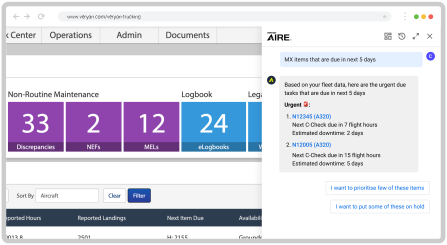
Instead of digging through records, users can quickly check aircraft status, understand upcoming or overdue maintenance, confirm parts availability, and validate compliance context directly within the system. Veryon AIRE surfaces the information teams need to make decisions in the moment, based on live maintenance and inventory data.
By continuously analyzing activity across the fleet, Veryon AIRE helps reduce blind spots that lead to missed items or delayed action. Maintenance history becomes easier to interpret, parts planning becomes more accurate, and compliance reviews can be completed faster without relying entirely on manual checks.
The result isn’t just better reporting. It’s faster answers, clearer visibility, and more confident decision-making during day-to-day operations. When intelligence is embedded into the workflow, teams spend less time searching for information and more time keeping aircraft ready.
3. Workflows that remove friction from daily execution
Downtime rarely comes from one major event. More often, it’s the accumulation of small delays that add up over time. Waiting on approvals. Re-entering data. Clarifying what’s actually been completed. Tracking down parts that should have been planned for earlier.
Those inefficiencies are often a direct result of disconnected systems.
Veryon Tracking is designed to reduce friction across the entire maintenance lifecycle by keeping execution in the same system as the record. Real-time dashboards provide visibility into aircraft status and work progress. Work orders can be updated and closed as work happens, including from mobile devices in the hangar. eSignatures accelerate compliance sign-off instead of pushing it to the end of a shift or week.
Veryon Tracking is built to remove that friction by keeping execution and the maintenance record in the same place. Real-time dashboards give teams a clear view of aircraft status and work progress as it’s happening. Work orders can be updated and closed directly from the hangar, including on mobile devices, instead of waiting until the end of a shift. eSignatures streamline compliance sign-off so documentation keeps pace with the work, rather than lagging behind it.
The impact is measurable. Operators consistently report meaningful time savings, including up to a 25% reduction in paperwork and as much as a 20% reduction in time spent managing maintenance and inventory. That reclaimed time goes back into planning, execution, and keeping aircraft available.
When workflows align with how maintenance actually happens, work moves faster and return-to-service timelines shorten. That’s where real uptime gains come from.
For mission-critical operators like Intermountain Health, centralizing maintenance activity and visibility into a single system played a meaningful role in modernizing operations. With a clearer fleet-wide view, teams were able to work more efficiently, strengthen compliance oversight, and make faster, more confident decisions across the fleet.
4. The ability to scale without adding pressure to the team
Growth has a way of exposing weak systems.
Adding aircraft increases complexity meaning more scheduled events, more parts movements, more compliance tracking, and more cross-team handoffs. If your maintenance tracking system isn’t designed to scale with that complexity, teams compensate with spreadsheets, manual checks, or side processes that live outside the system. Over time, that’s where errors, delays, and compliance gaps begin to surface putting more pressure on already lean teams.
Veryon Tracking is built to scale with the operation, not strain it. As a cloud-based and configurable platform, it allows workflows to evolve alongside the operation. Because the entire fleet operates within a single unified platform, adding aircraft doesn’t mean adding complexity for the team. Fixed-wing, rotor-wing, and mixed fleets can all be supported without rebuilding processes or increasing headcount.
That scalability was a key driver for Coterra Energy, which operates a mixed fleet supporting demanding, time-sensitive operations. As their fleet and mission requirements evolved, they needed a maintenance tracking platform that could scale without forcing the team to manage separate systems or rely on workarounds.
By consolidating maintenance tracking, inventory, and operational visibility into Veryon Tracking, Coterra’s team gained tighter control over fleet status and planning while reducing administrative overhead. The result was a system that could grow with the operation, not slow it down.
Scaling confidently isn’t just about adding aircraft. It’s about maintaining clarity, consistency, and control as complexity increases, without burning out the team or introducing unnecessary risk.
5. A partner that stays involved after go-live
 Even the best platform needs support behind it, especially in a 24/7 operational environment.
Veryon’s Fleet Performance Partnership is built around proactive engagement rather than reactive ticket handling. Customers work with a dedicated Customer Success Manager backed by a deep bench of aviation experts who understand maintenance pressure and regulatory realities.
This model delivers real value: faster issue resolution, fewer operational surprises, and support that scales without increasing internal headcount. It also gives teams confidence that they’re not navigating audits, compliance changes, or operational challenges alone.
That kind of partnership helps ensure modernization efforts translate into real operational improvements, not just new software. Teams gain confidence knowing they’re not navigating audits, compliance changes, or day-to-day challenges on their own.
What to Do Next
If this resonates, you’re probably already thinking about where your current system helps and where it quietly gets in the way. The good news is you don’t have to figure out the next step on your own.
Here are a few ways to keep the conversation moving, depending on where you are in the process:
See how Veryon Tracking works in a real-world environment
If you want to understand how an integrated operating system for maintenance actually looks day to day, schedule a demo of Veryon Tracking. You’ll see how maintenance, inventory, intelligence, and execution come together on one platform, and how teams use it to reduce friction and improve uptime.
Book a demo of Veryon Tracking →
Go deeper with the Buyer's Guide
If you’re still evaluating options or building an internal case, the companion Buyer’s Guide walks through what to look for in a modern maintenance tracking platform, the questions to ask vendors, and common pitfalls to avoid.
Download the Maintenance Tracking Buyer's Guide →
Join the conversation live
For teams that prefer to hear directly from industry peers and experts, register for an upcoming webinar to see how operators are modernizing maintenance programs and scaling with confidence.
Register for an upcoming Veryon deminar →
Modern maintenance teams aren’t being held back by a lack of skill or commitment. They’re slowed down by systems that weren’t designed for how aviation operates today.
The right maintenance tracking platform connects the record, the workflow, the intelligence, and the expertise behind every maintenance decision. The next step is deciding whether your current system is helping your team move forward or quietly holding them back.