

6 min read
Business aviation maintenance teams are being asked to move faster than ever while managing growing operational complexity behind the scenes. Aircraft utilization continues to rise, schedules remain tight, and many teams are still balancing heavy administrative workloads with lean staffing.
In most cases, the maintenance itself isn't what slows operations down. It's the work surrounding it. Creating work orders, entering maintenance details, uploading records, searching for documentation, and managing compliance-related tasks can quietly consume a large portion of the day, especially during busy maintenance periods.
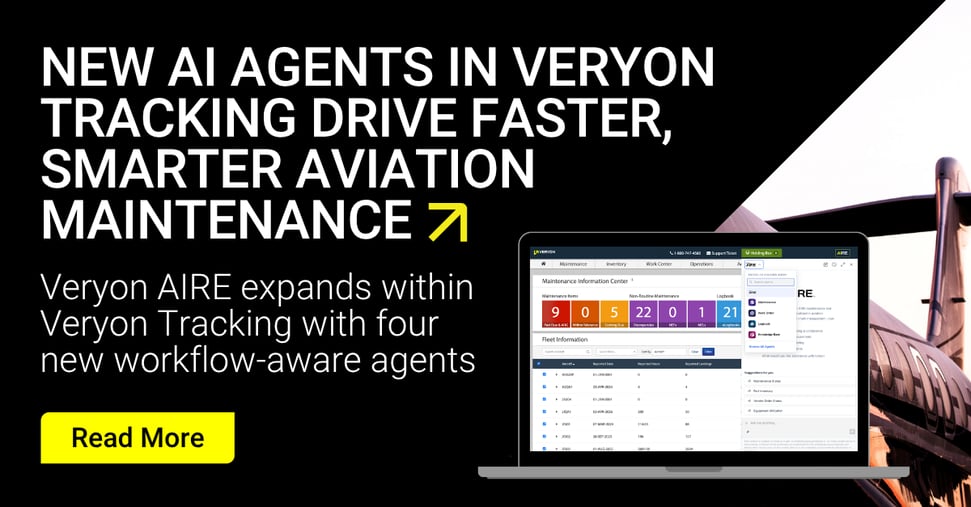
That's why Veryon expanded Veryon AIRE inside Veryon Tracking with four new workflow-aware AI agents designed to help teams reduce repetitive work and simplify the workflows they already manage every day.
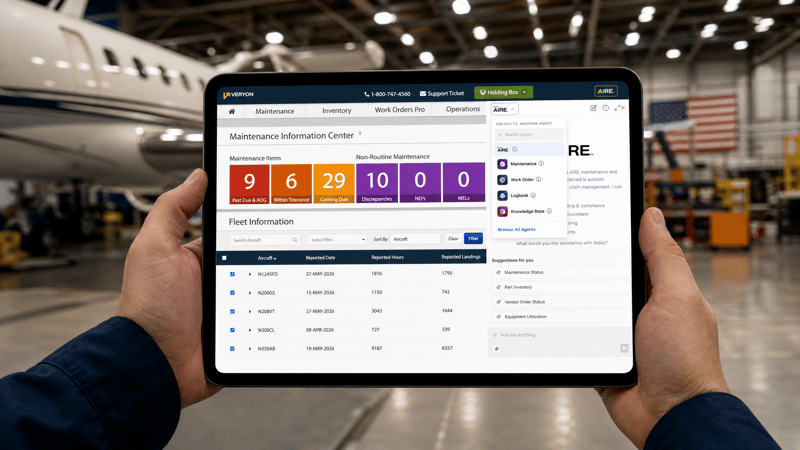
The new agents include:
 |
Maintenance Agent |
 |
Work Order Agent |
 |
Logbook Agent |
 |
Knowledge Base Agent |
Unlike standalone AI tools that sit outside the workflow, these agents are built directly into Veryon Tracking so teams can use them naturally within the platform they already rely on.
This isn't about "Using AI." It's about working more efficiently
A lot of conversations around AI in aviation tend to focus on future possibilities, but most maintenance teams are focused on much more immediate priorities. They want to reduce paperwork, speed up maintenance coordination, simplify documentation, and stop wasting time jumping between systems or searching for information.
That's where these new agents are designed to help.
The goal isn't to introduce another tool your team has to learn or manage separately. The goal is to make the workflows your team already repeats every day faster, simpler, and less manual.
For some teams, that may mean spending less time creating work orders. For others, it may be reducing duplicate entries, organizing maintenance records more efficiently, or helping technicians find answers faster without interrupting the workflow.
Individually, those improvements may seem small. Across an entire operation, though, they can make a meaningful difference in turnaround time, efficiency, and overall aircraft availability.
The best approach is to start small
One of the biggest misconceptions around AI adoption is that teams need to change how they work completely overnight. In reality, the most successful teams usually start with one workflow that consistently creates friction and improve that process first.
For many operators, that starting point may be work order setup, maintenance item creation, documentation management, or simply helping users find information inside the platform more quickly.
Once teams begin seeing value in one area, expanding usage tends to happen much more naturally.
Where different teams may see value first
Different roles inside the maintenance organization will likely gravitate toward different agents depending on where their biggest frustrations exist today.
Directors of Maintenance may see the greatest value in reducing administrative bottlenecks that slow aircraft availability and pull teams away from operational oversight. Maintenance planners and controllers may benefit most from simplifying repetitive setup work tied to maintenance items and work orders. Technicians often spend unnecessary time searching for information across multiple screens, while technical records teams are usually looking for ways to make documentation and logbook management less time-consuming.
The advantage of embedding these agents directly into Veryon Tracking is that teams can adopt them gradually within the workflows they already know, rather than introducing a new process.
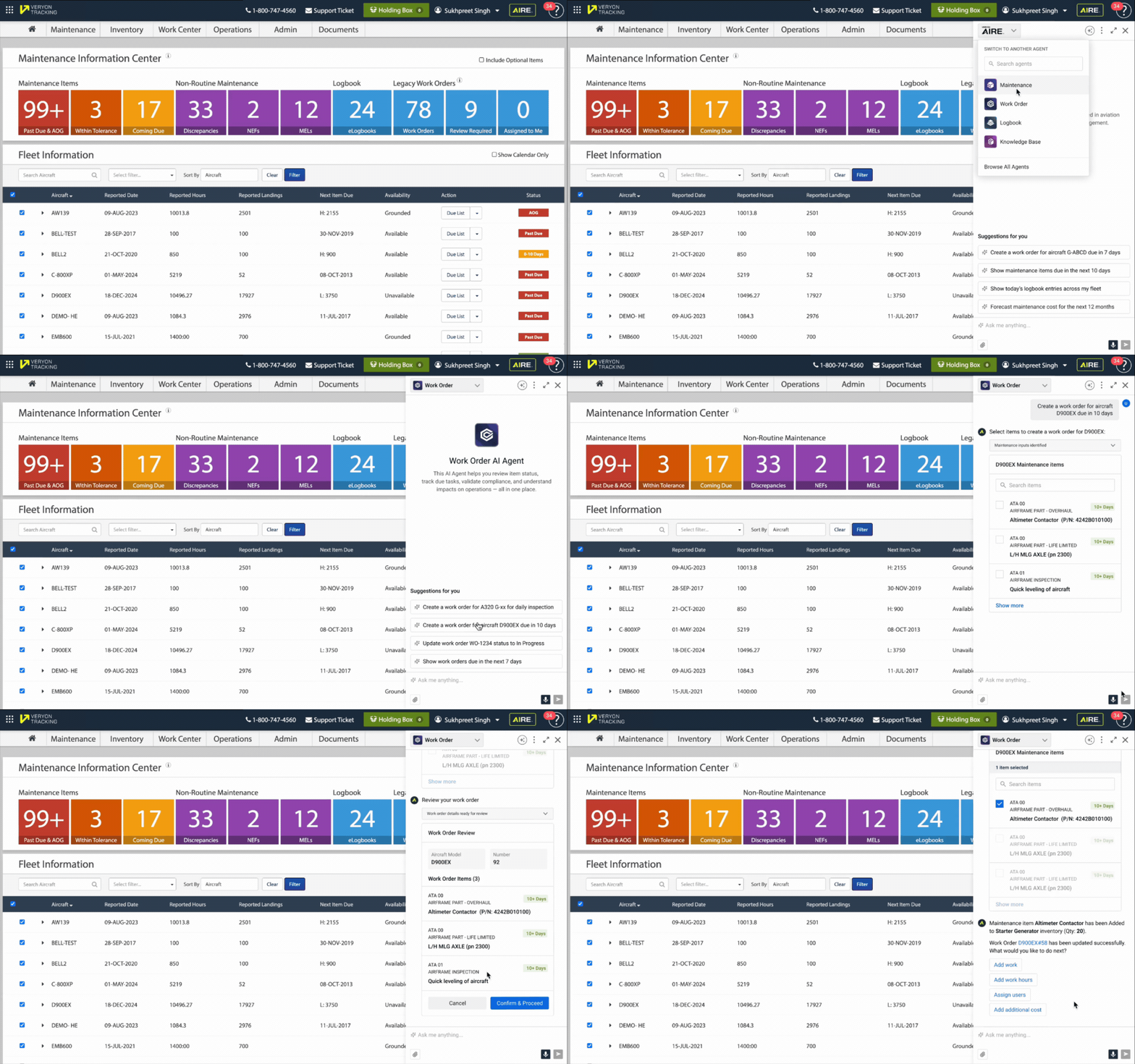
Work Order Agent
Reducing the administrative burden around work orders
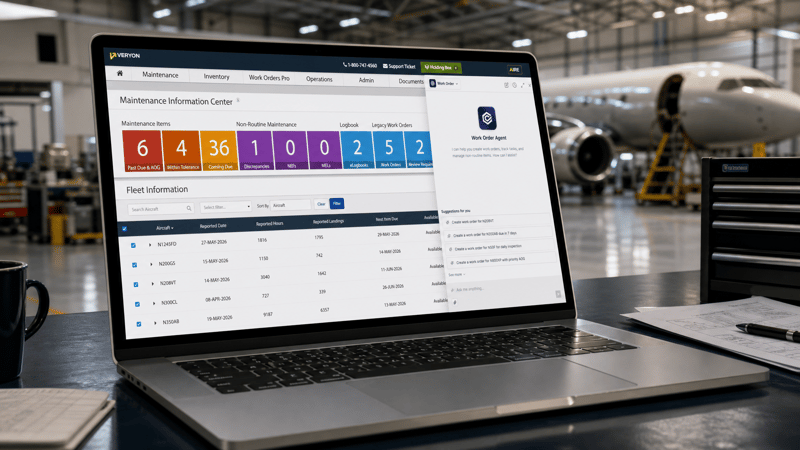
For many business aviation maintenance teams, work order administration becomes one of the biggest operational bottlenecks during busy inspection cycles or scheduled maintenance events.
The Work Order Agent simplifies the process of creating, organizing, and managing work orders directly in Veryon Tracking. Teams can more efficiently connect due-list items, work-to-complete details, and related inventory information without manually building every piece of the workflow from scratch.
The agent can also help update compliance records when importing legacy maintenance work orders, making it easier to migrate historical maintenance data while improving record accuracy and reducing manual administrative effort.
A good place to begin using the agent is within recurring inspections or maintenance events where your team already follows a repeatable process. Over time, reducing the administrative effort required for work order management and record migration can improve coordination, streamline maintenance planning, and help teams move work through the system more efficiently.
Maintenance Agent
Helping teams create maintenance items more efficiently
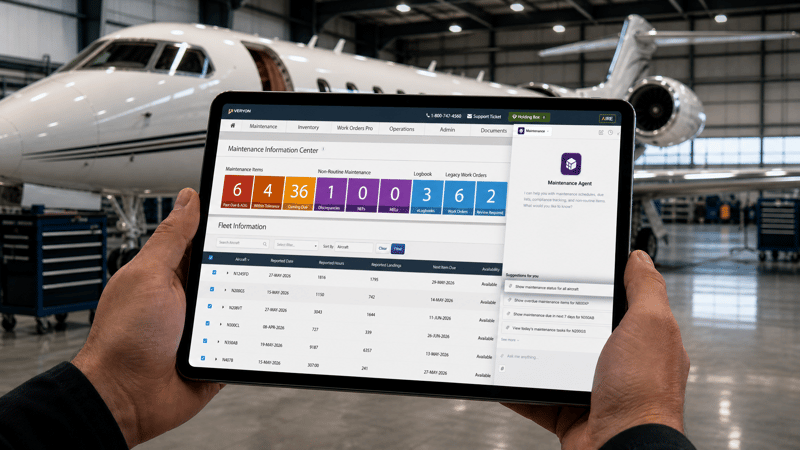
Creating and managing maintenance items manually can quickly become repetitive, especially for operators managing multiple aircraft or mixed fleets.
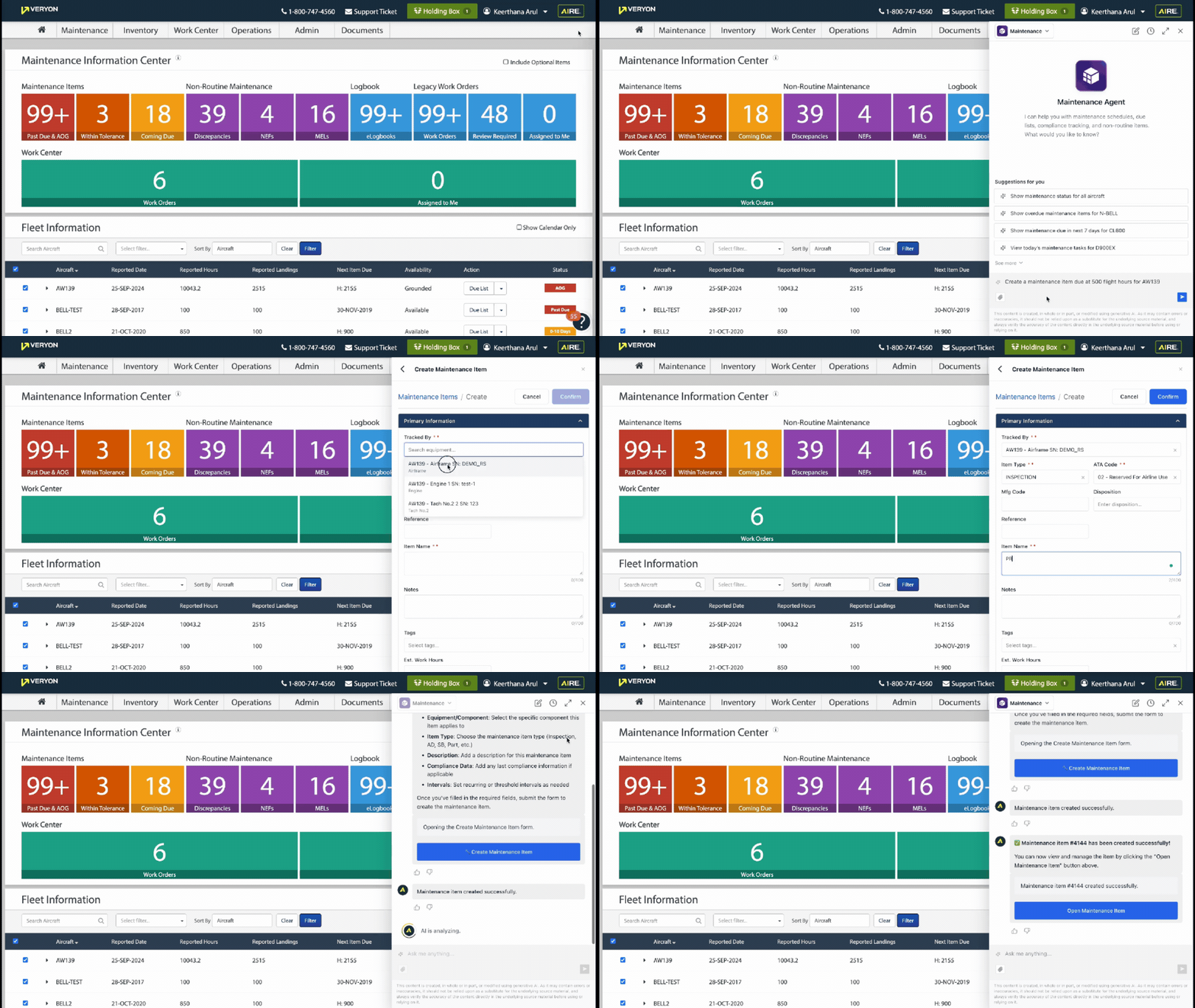
The Maintenance Agent helps simplify maintenance item creation and updates by assisting with maintenance item setup, intervals, due-list details, tail-specific information, and additional maintenance record workflows. It can also help create non-routine maintenance items, allowing teams to move through both planned and unplanned maintenance activities more efficiently.
Instead of relying entirely on manual entry, teams can streamline routine workflows while maintaining cleaner, more consistent maintenance records across the fleet.
For maintenance planners and controllers handling large volumes of recurring activity, even modest reductions in repetitive setup work can yield noticeable time savings over the course of a week while helping improve data consistency and operational efficiency.
Logbook Agent
Making documentation workflows less painful
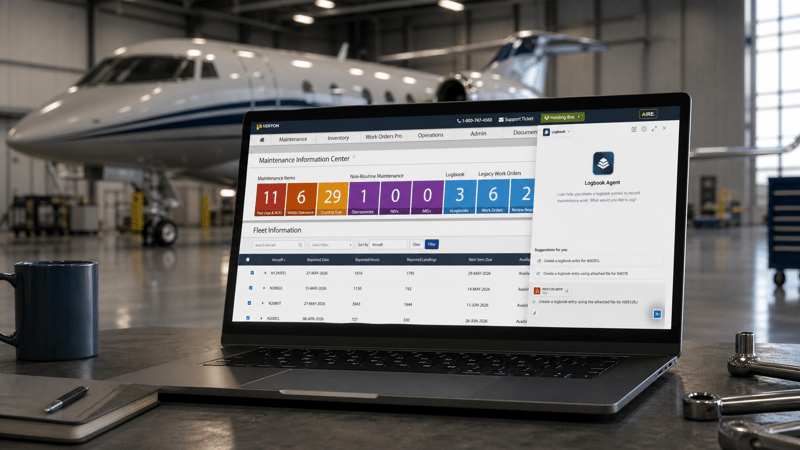
Documentation has always been one of the most time-consuming parts of aviation maintenance, even though it's one of the most important.
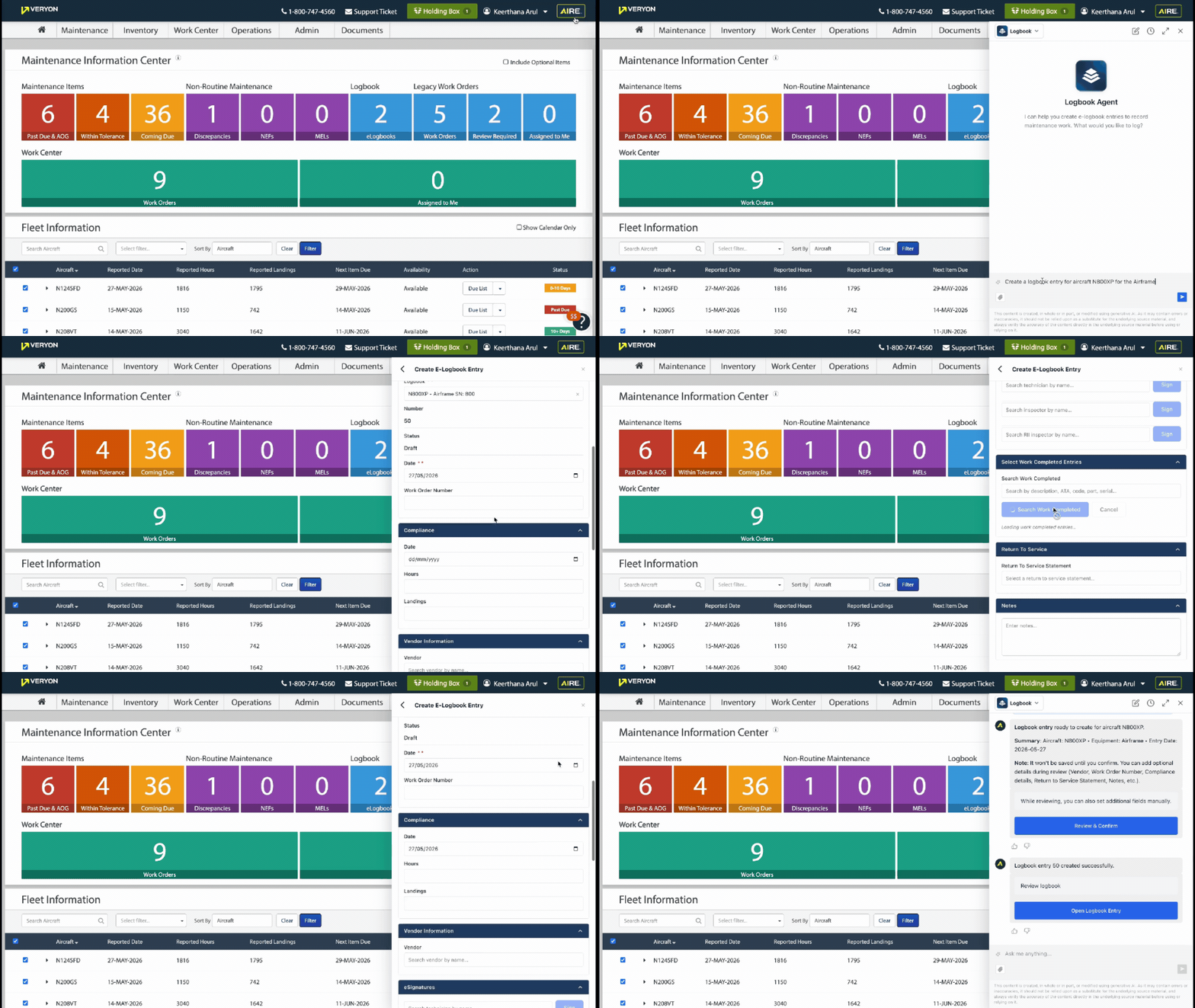
The Logbook Agent helps streamline maintenance recordkeeping and documentation by allowing teams to create eLogbook entries directly from uploaded PDF logbook documents and post-service records. It also supports the creation of non-routines, purchase orders, and inventory items through guided form-based workflows, helping teams complete common administrative tasks more efficiently.
By reducing manual data entry and simplifying documentation workflows, maintenance teams can spend less time managing records and more time focused on keeping aircraft operational.
For operators preparing for inspections, aircraft transitions, or resale events, maintaining organized digital records can significantly reduce administrative burden while improving visibility and consistency across maintenance documentation.
Knowledge Base Agent
Helping teams get answers faster
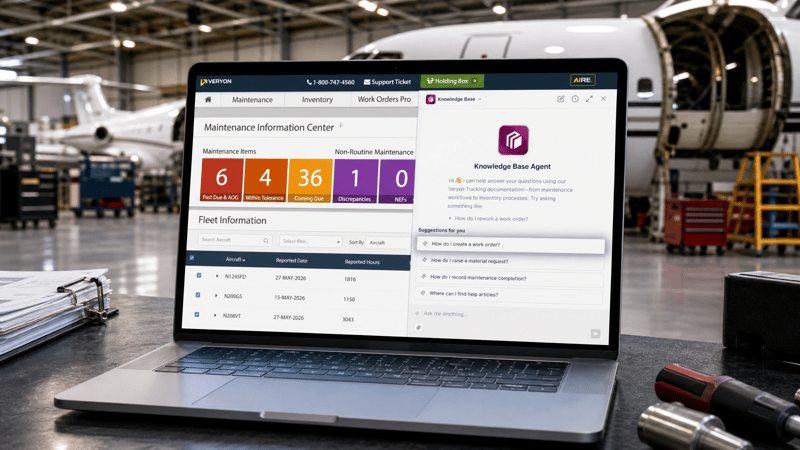
One of the easiest ways for teams to begin using the new AI experience is through the Knowledge Base Agent, which naturally fits into the workflows users already have today.
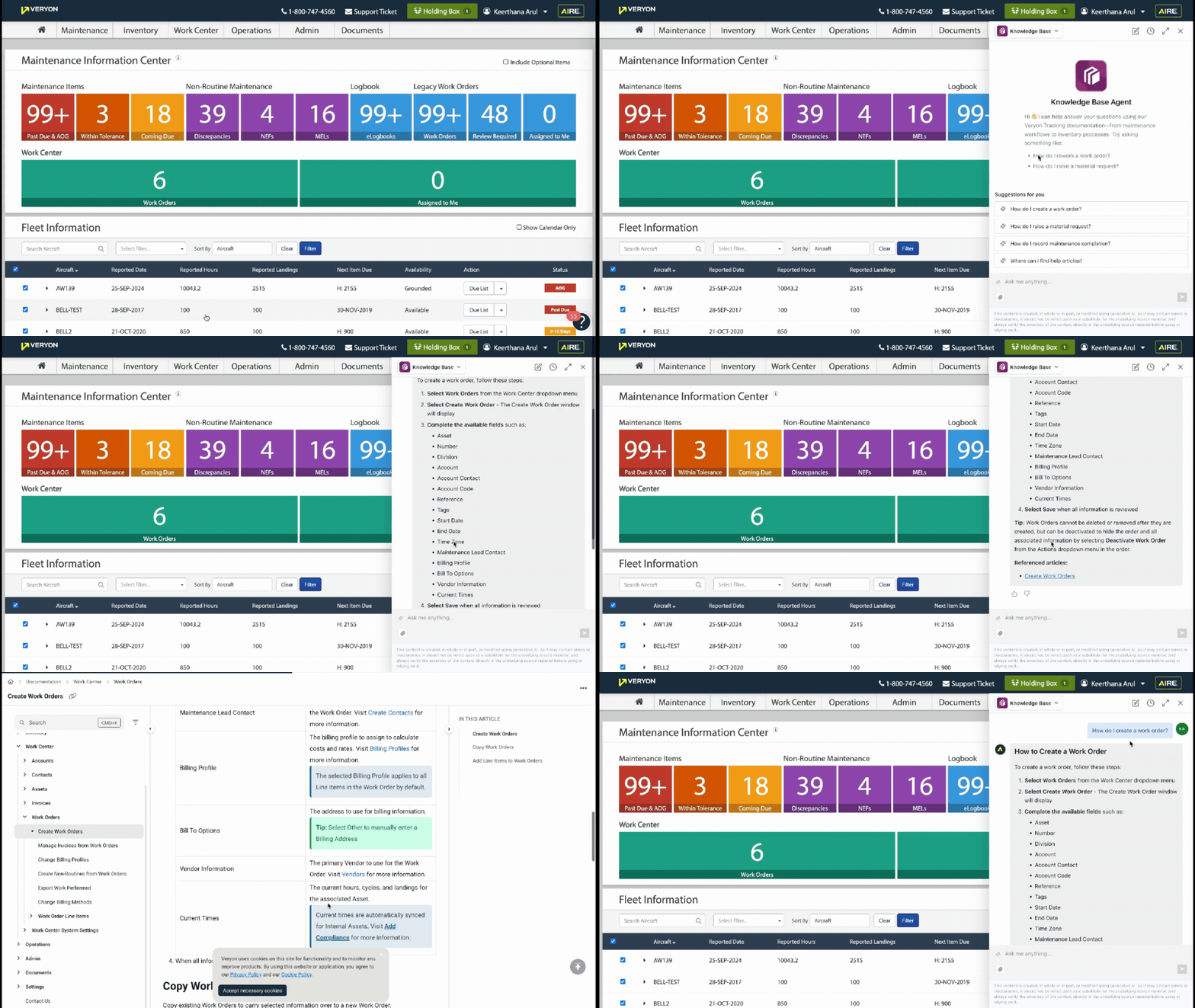
Instead of digging through menus or searching for documentation manually, users can ask questions directly inside Veryon Tracking and quickly access help articles, setup instructions, workflow guidance, and source-linked answers without leaving the platform.
For newer users, especially, this can make the system feel much easier to navigate and reduce the learning curve for everyday tasks.
Three simple ways to start using the agents
If your team isn't sure where to begin, the best approach is to keep it practical and low-pressure.
1.) Ask Veryon AIRE which due items could be bundled into a single work order this month. This is an easy way for planners and controllers to start seeing how the agents can help simplify coordination and reduce repetitive workflow setup.
2.) Upload a recent service-related PDF into the Logbook Agent and let the system help create an eLogbook entry. It's a practical way to reduce manual re-entry and see how documentation workflows can become faster and more organized.
3.) Use the Knowledge Base Agent instead of manually searching through menus or help articles when questions come up during the day. Teams can quickly access setup instructions, workflow guidance, and source-linked answers directly inside Veryon Tracking without interrupting the workflow.
The goal isn't to master every feature immediately. It's simply to identify where the agents can remove friction from the workflows your team already handles every day.
The agents are designed to assist, not replace
It's important to remember that these agents are designed to support maintenance workflows, not replace maintenance judgment or regulatory oversight.
Your team remains fully in control of approvals, records, and operational decisions. The agents are there to help reduce repetitive administrative work, surface information more quickly, and simplify routine workflows, while keeping experienced maintenance professionals at the center of the process.
Why now is a good time to explore the new experience
If your team tried Veryon AIRE previously and felt limited by prompt restrictions, this rollout changes the experience considerably.
Unlimited prompts remove the hesitation around experimentation and allow teams to use the agents more naturally throughout the day without worrying about conserving usage. That creates a much better opportunity to explore real-world workflows, test practical use cases, and identify the biggest operational efficiencies.
In business aviation maintenance, even small improvements in workflow efficiency can have a meaningful impact on aircraft availability, turnaround time, and overall operational performance.
Less administrative friction, faster workflows, and more time focused on keeping aircraft in the air is ultimately what this new feature rollout is designed to support.
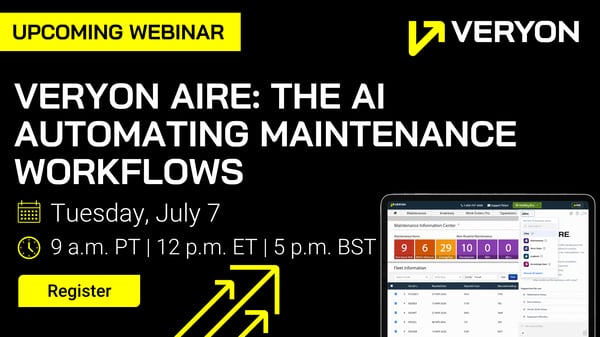
Want a closer look at how these new AI-powered agents work inside real maintenance workflows?
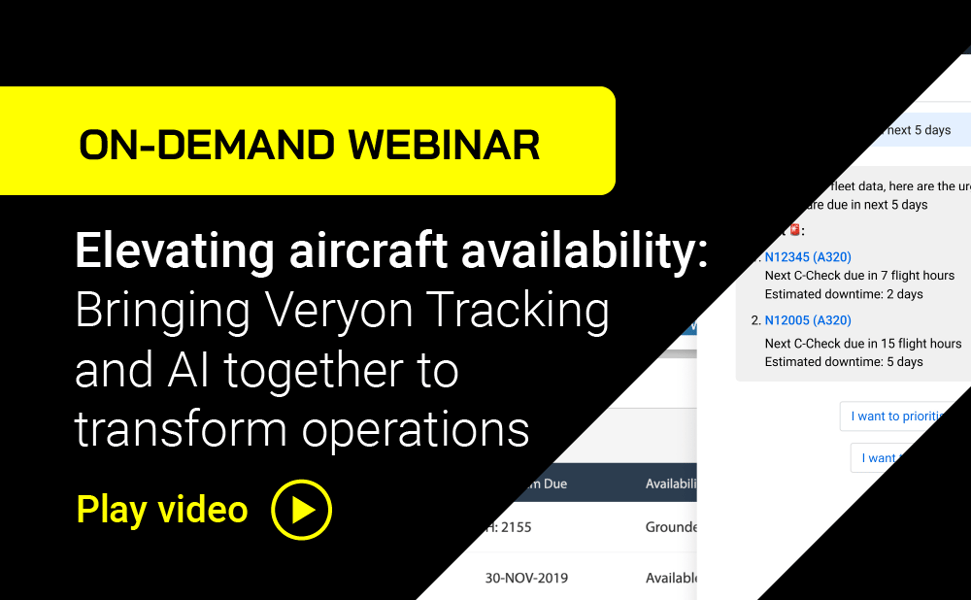
Join us on July 7 at 12 p.m. EST for a live webinar where the Veryon team will walk through the new Veryon AIRE capabilities inside Veryon Tracking.
You'll see how workflow-aware AI can help maintenance teams:
• Reduce manual administrative work
• Accelerate turnaround times
• Improve operational consistency
• Access answers and documentation faster
• Streamline maintenance execution across daily operations
Whether you're evaluating AI in maintenance operations or looking for ways to help your team work more efficiently, this session will offer a practical look at how embedded intelligence is transforming the maintenance experience in Veryon Tracking.
Want more resources?
Explore Veryon's full library of expert content and aviation insights — from maintenance tracking to diagnostics, proactive reliability, and beyond.

Stay Connected
Join thousands of aviation professionals who turn to Veryon for insights on proactive maintenance, industry innovation, and emerging tech trends.
Follow Veryon on LinkedIn and be part of the conversation driving aviation's digital transformation.